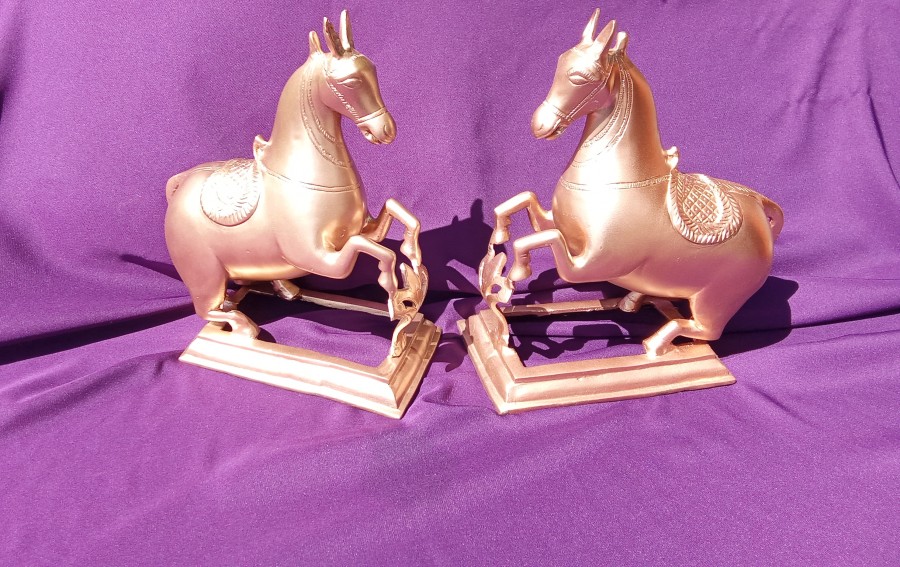
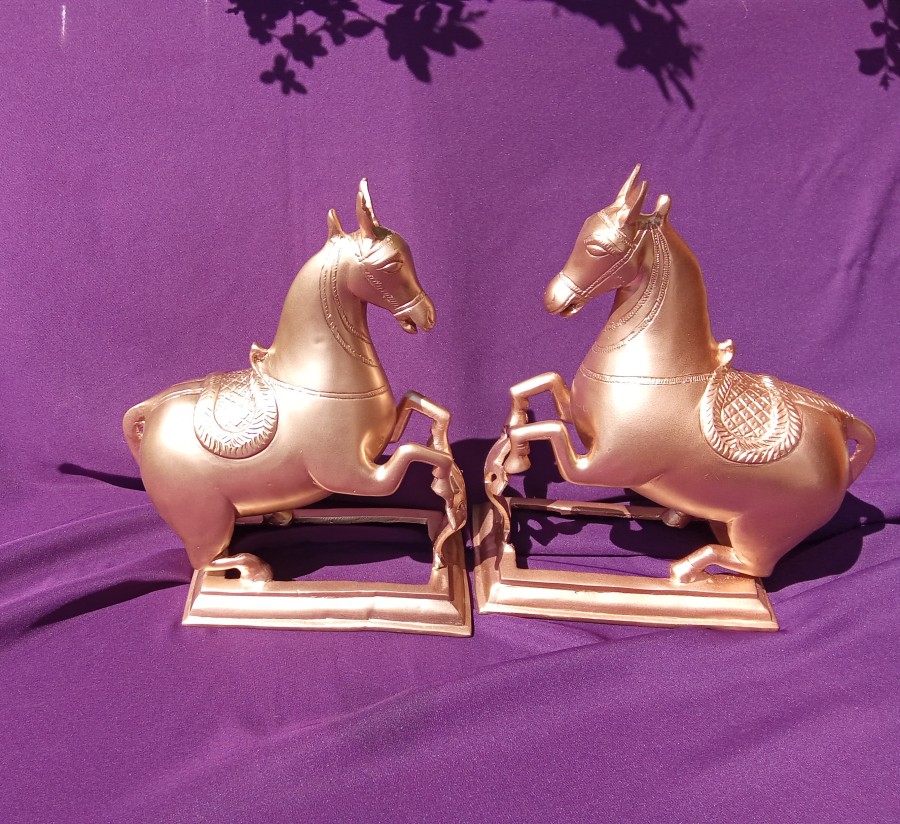
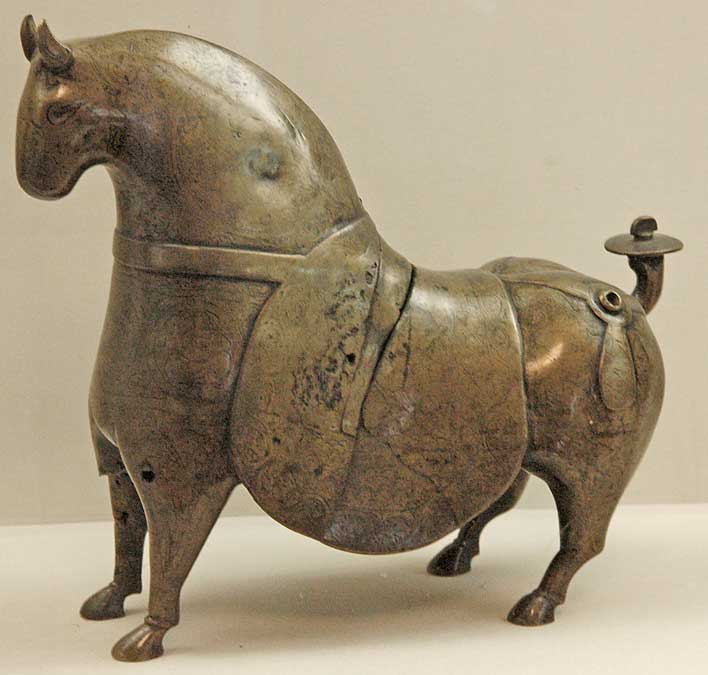
We are pleased to offer these exquisite Mughal rearing cast brass horses from 18th century India.
Eighteenth Century India Mughal cast brass horses are attributed to Persian artists who came into India in the late 16th century, bringing with them a tradition dating back to Abbasid times.
You can see an example of the earlier type, which exhibits similarities to our horses, in the State Hermitage Museum, St. Petersburg (Russia) and is dated to the tenth century (please refer to last image above).
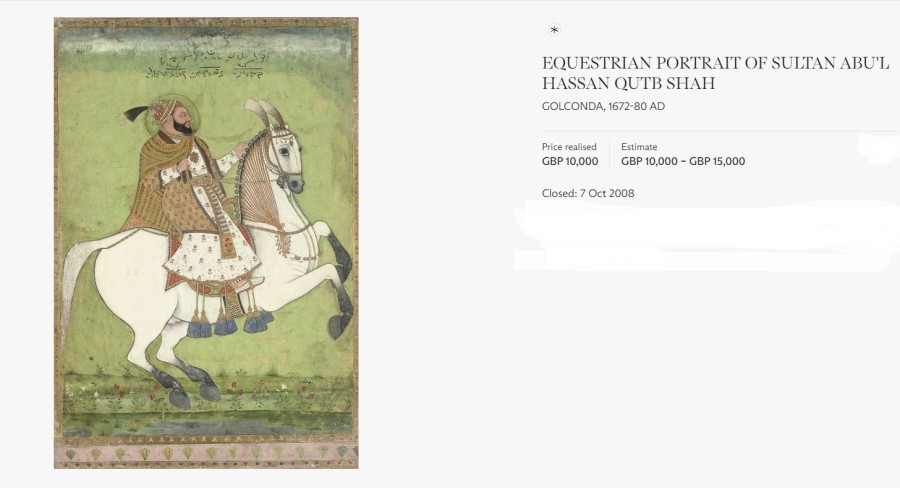
In 17th century Mughal India, equestrian portraits of Kings, Princes, Nawabs astride horses were introduced and became popular among the elite. The horses are usually depicted with large oversized bodies and disproportionately small heads. This follows on from the earlier tradition captured by the example in the State Hermitage Museum.
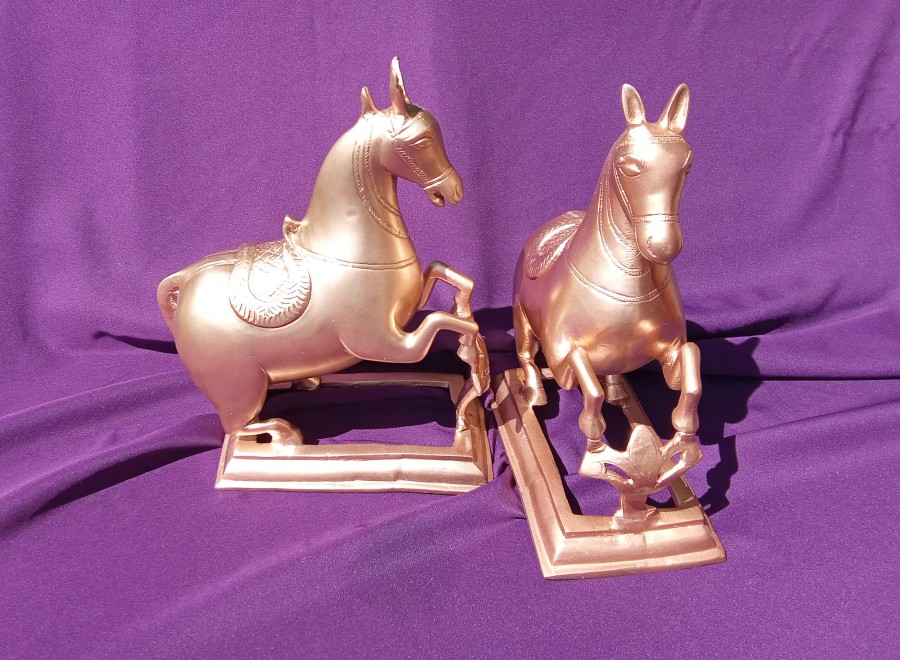
This pair are beautifully portrayed with a naturalistic, rearing poise, open mouth and pricked up attentive ears. The oversized body, large rotund belly and small head is typical of the earlier period of manufacture (18th Century). Later examples have less detail, the colour of the brass moves towards the brown bronze type and the overall appearance becomes more figural than abstract.
The front hooves are resting on a representation of the lotus flower.
The lotus flower is a symbol that is common in India and the Far East.
In India, lotus flowers represent spiritual enlightenment, growth, purity, and birth, among many other meanings. The flower symbolizes one’s ability to perform their duty without being influenced by any desire, pleasure, or gain.
A rearing horse was a symbol of power and control and a tradition of equestrian portraits depicting rules astride rearing horses began in the 17th Century.
Therefore, these rearing horses with their front, raised hooves resting on a lotus flower represent the combination of power and spiritual enlightenment. These types of equestrian figures were clearly made for Princes, Raja’s and senior courtiers as evidenced by the fact that existing paintings of the period often show Emperors, Kings & Princes riding them.
The oblong base demonstrates that they were part of a larger work of art – possibly an incense burner. These rearing horses could also have been attached to a large piece of furniture of at the ends of a throne.
Each horse measures: 27cm (H) x 19cm (L) x 10cm (D).
They are very heavy due to being made from the casting process with dense brass.
They are solid (not hollow) and each one weighs around 3,100g (3.1kg).
The almost matched weight is remarkable when you take into consideration the primitive technology, basic tools and complex processes involved in making something so beautiful and large around 300 years ago.
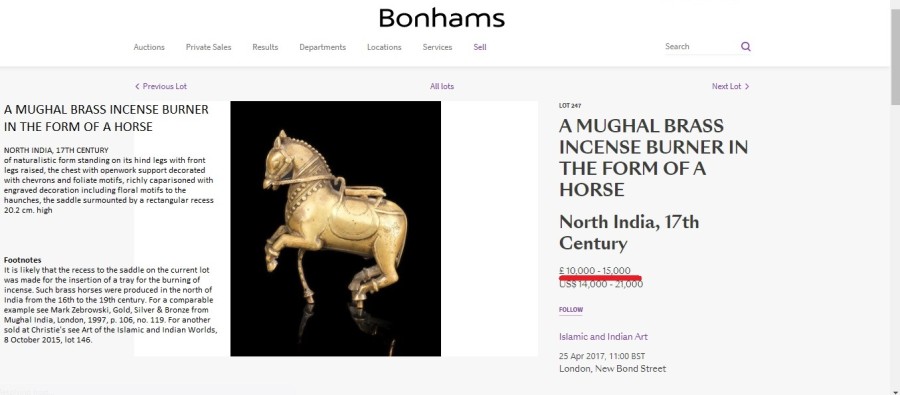
Bonhams offered a SINGLE similar rearing horse for £10,000-£15,000 in April 2017, dating their example to the 17th century. The Bonhams example also had a similar style of saddle. It was also part of something larger as can be seen by the fittings at the bottom.
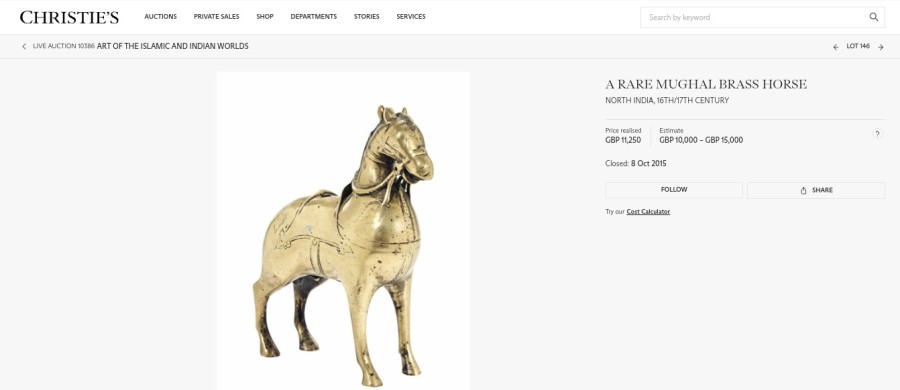
Christies offered a standing type Mughal cast brass horse (London, 2015) with an estimate of £10,000-£15,000. It was dated to the 16th/17th century and offered with “a small repair to body”. It was also smaller than our horses as it only stood 21cm in height.
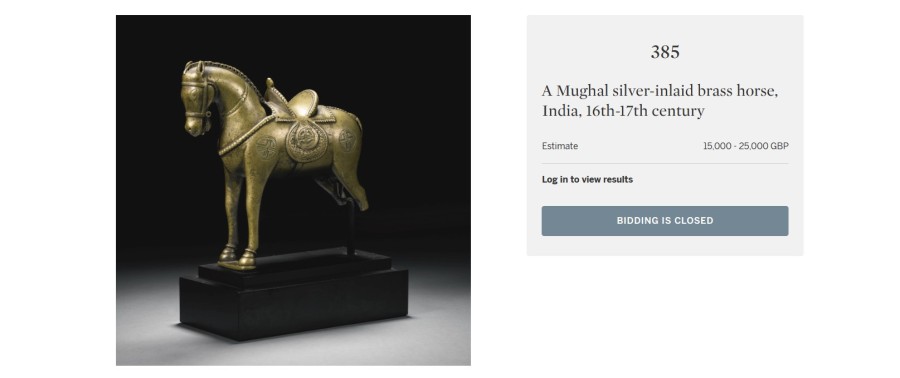
Sothebys offered a standing horse with both back legs missing dated to around 1700
with an estimate of £15,000-£25,000.
To find a pair of such high quality Mughal period horses is near impossible.
These would make an amazing, unique and remarkable centre-piece to any room.
Further details and images are available on request (please use the enquiry form on the right).
Store Name: Islamique Antiques
Store Email Address: oldbradfordian@hotmail.com
Contact Number: 07837392006
Date Joined: 24th February 2021
You can commit to buy this item now. Proceed to checkout and complete shipping and contact details. Seller will be in touch to confirm delivery options, take payment and confirm the delivery. Note: Delivery costs may be added on by the seller.
In Stock
Contact the seller by filling out this form below. Seller will contact you back directly by email. You will need to arrange delivery, final cost & payment directly with the seller. Alternatively you can phone the dealer by clicking “Dealer Details”. Phone number will only show if seller has enabled phone call option.