Description
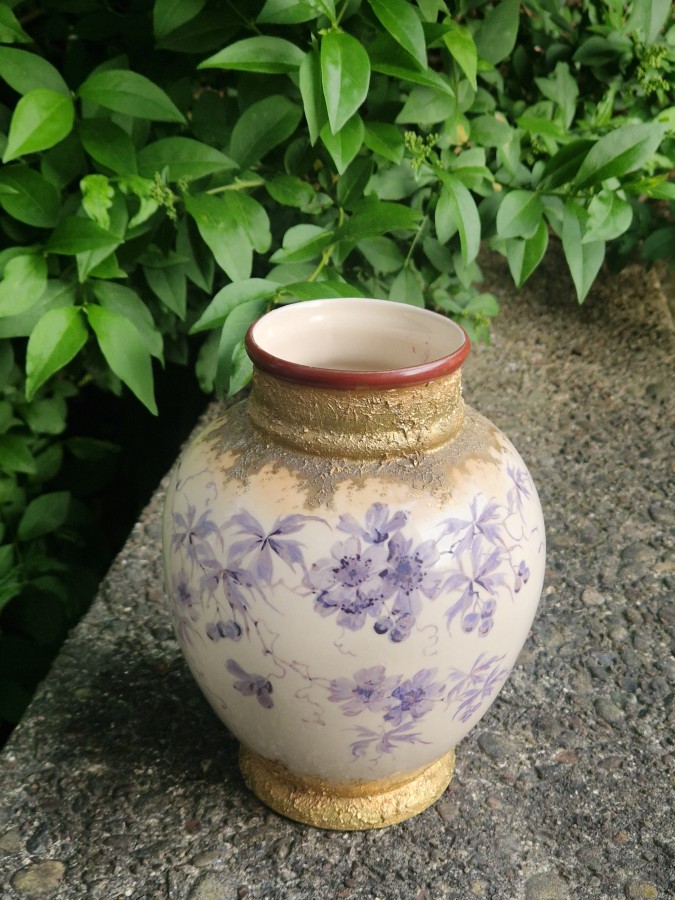
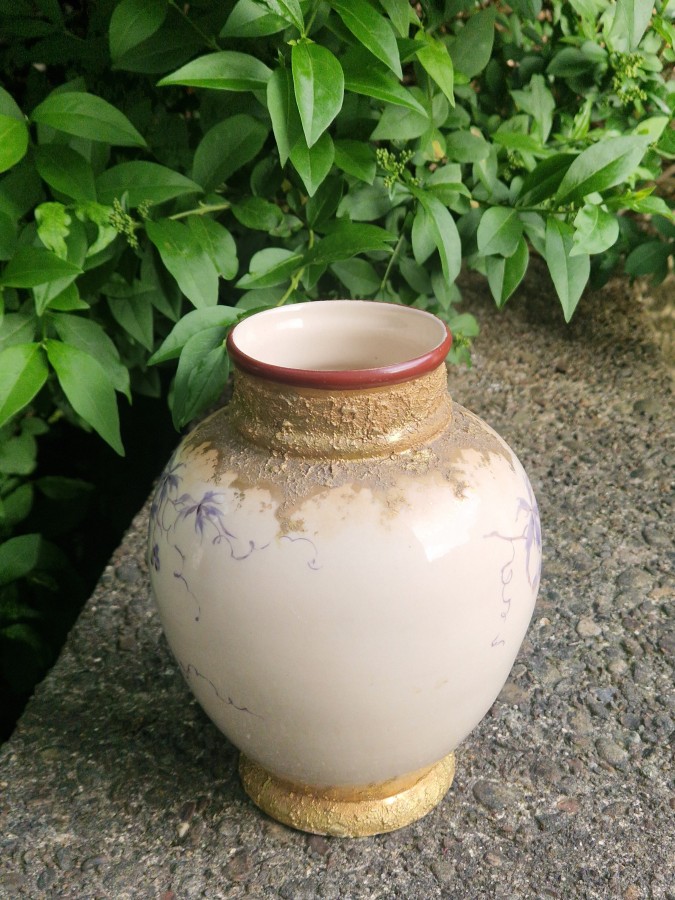
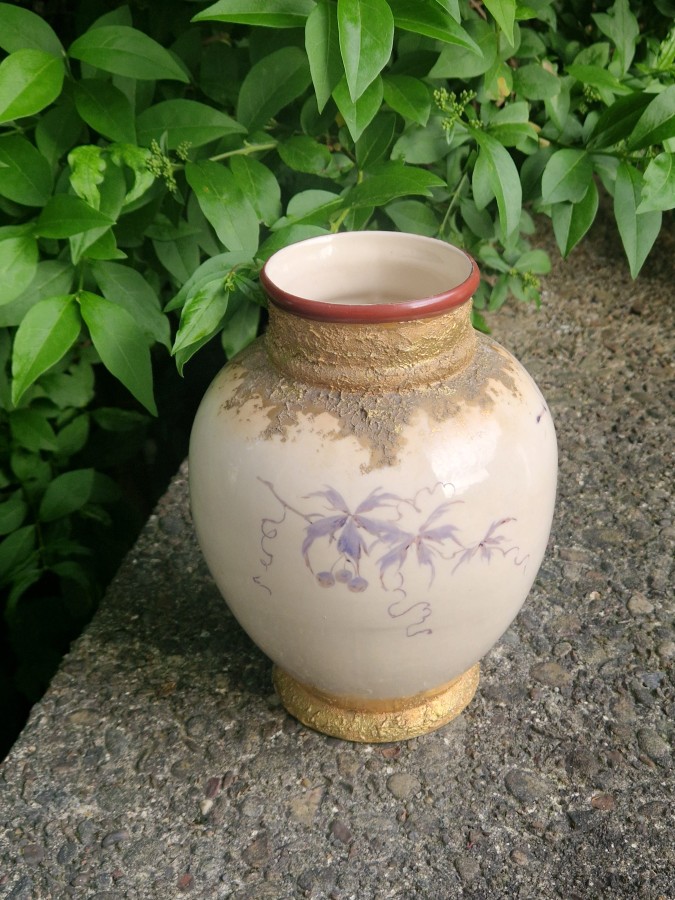
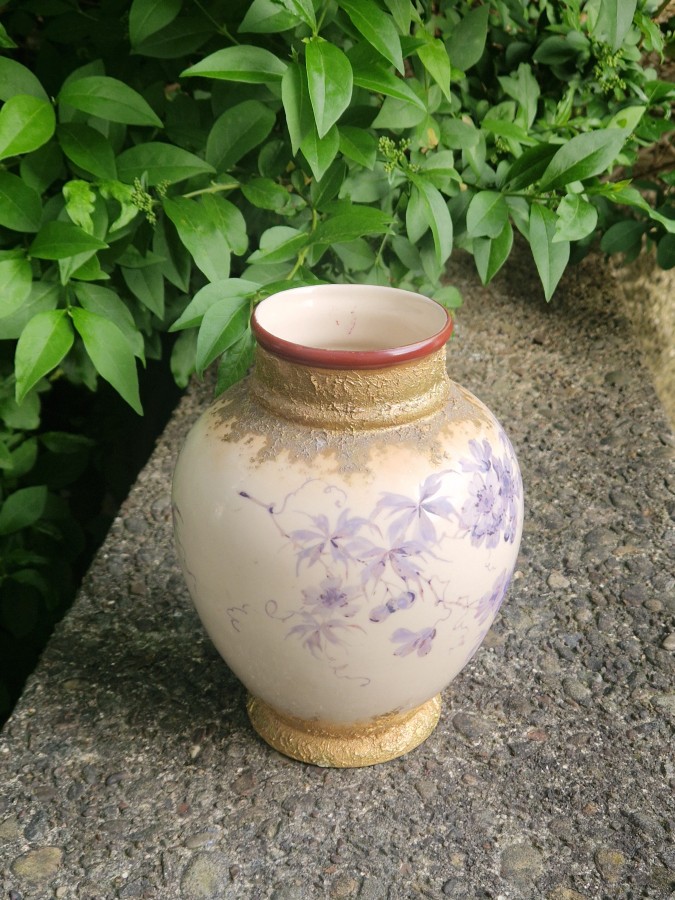
This vase reflects the Japanese Satsuma pottery tradition that flourished during the Meiji period (1868-1912), when Japan opened to Western trade and export wares became highly sought after. Satsuma ware is characterized by its cream-colored crackle-glazed earthenware body decorated with delicate overglaze enamels, often featuring floral motifs like wisteria, chrysanthemums, and cherry blossoms. The wisteria pattern was particularly popular as it symbolized longevity and endurance in Japanese culture.
Satsuma-style ceramics appeal to collectors of Japanese art, Asian antiques enthusiasts, and decorative arts aficionados who appreciate the refined craftsmanship and cultural symbolism. These pieces are valued for their historical connection to Japan’s artistic heritage during a transformative period, their delicate hand-painted decoration, and their ability to bring elegance and Eastern aesthetic sensibility to interior spaces. Collectors prize authentic Meiji-period examples, though later reproductions and Satsuma-style pieces also attract interest for their decorative appeal.