Description
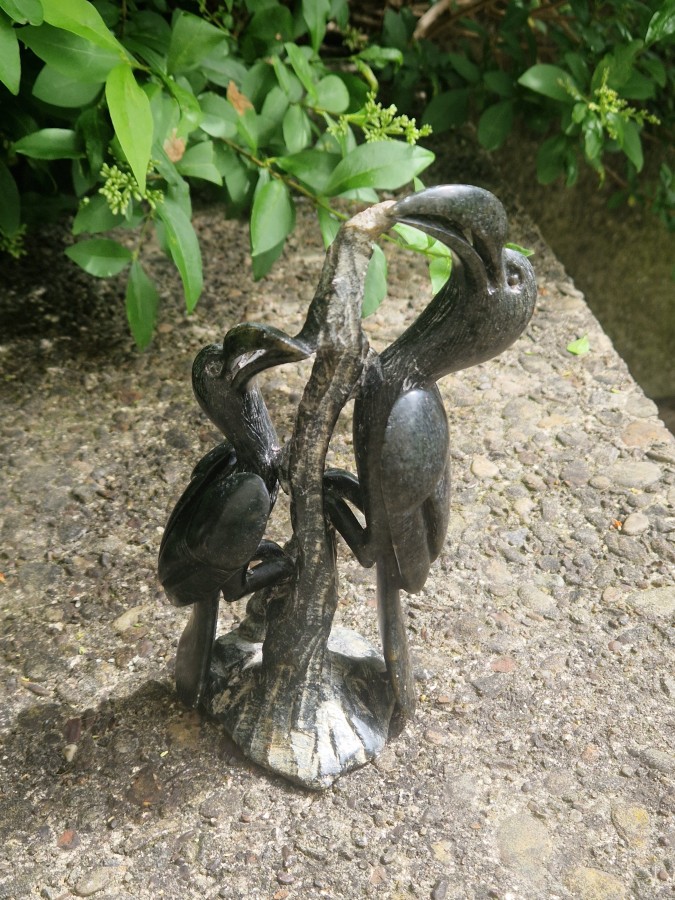
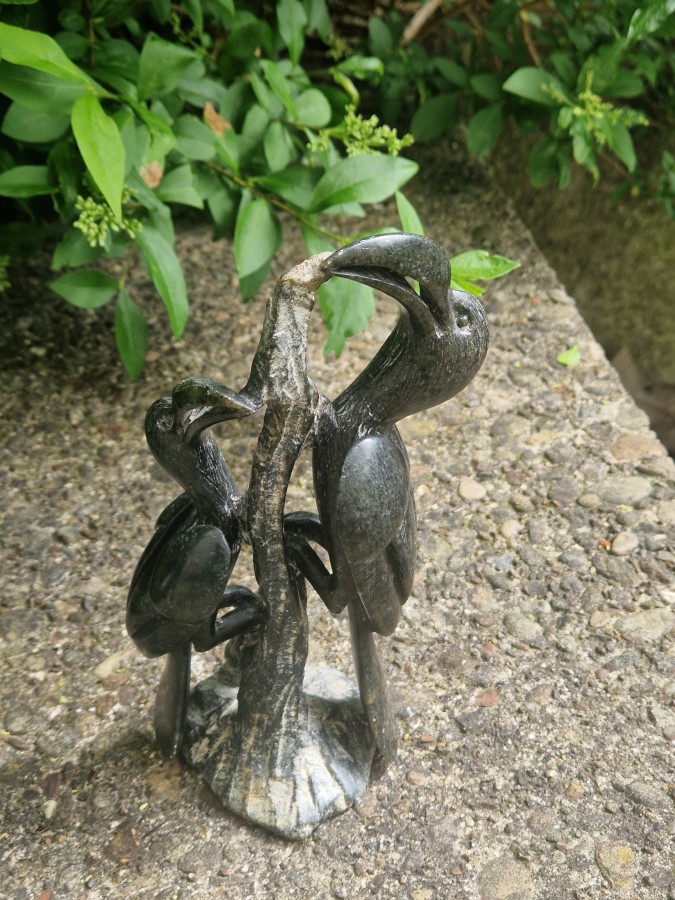
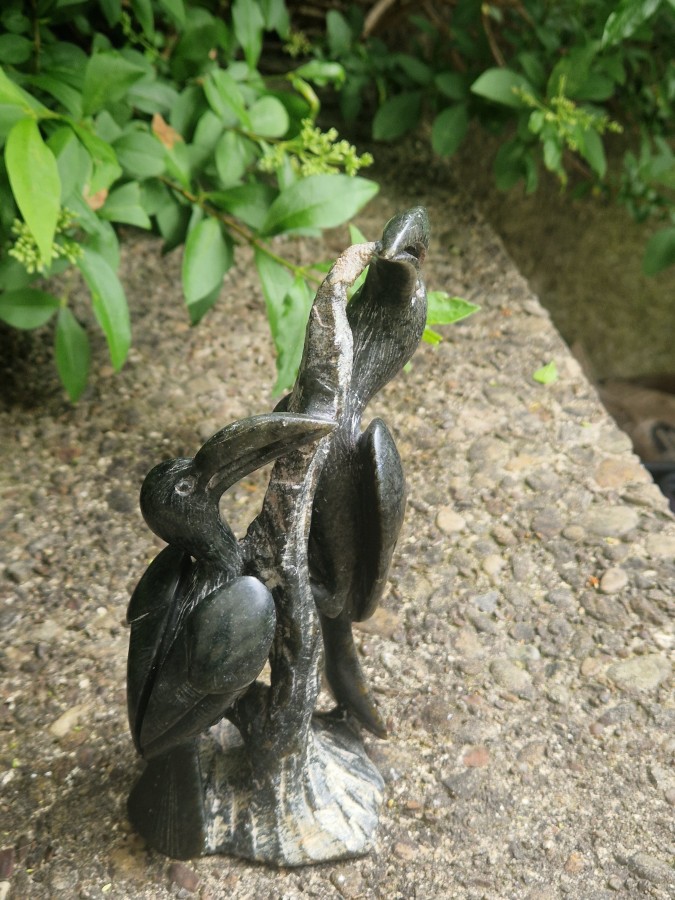
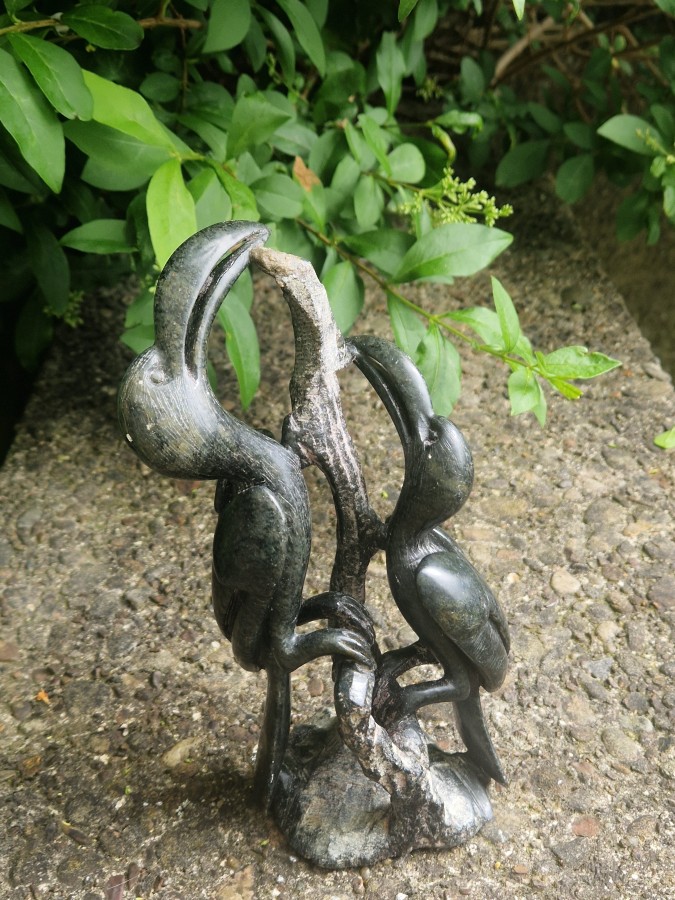
This sculpture represents the traditional Shona stone carving art form that emerged in Zimbabwe during the 1950s and gained international recognition in the 1960s. Shona sculptors work primarily with serpentine, a locally abundant stone, to create figurative works often depicting wildlife, spiritual themes, and daily life. The hornbill holds special significance in African culture, symbolizing loyalty, devotion, and partnership, as these birds are known to mate for life. These sculptures became popular in Western markets during the late 20th century as collectors discovered the unique aesthetic and cultural authenticity of Zimbabwean stone art. Shona stone sculptures appeal to collectors of African art, wildlife enthusiasts, and those interested in contemporary primitive art forms. The pieces are valued for their smooth, organic forms, the natural beauty of the serpentine stone with its varied coloring, and the cultural heritage they represent. Museums and galleries worldwide feature Shona sculpture collections, and individual pieces are sought after as both decorative art and investment pieces that celebrate African artistic traditions.