
£15,000.00
In Stock
Early 19th-century paintings often highlighted by auction houses as ”Rudolphine school” refer to artworks inspired by the 17th-century Prague court of Rudolf II, frequently featuring detailed allegories, mythological scenes, cherub putti or still life”s with rich, dramatic chiaroscuro.
These works, are a romanticised, 19th-century academic reinterpretation of Baroque putti themes, often mistaken for later, are characterised by intense, detailed, and often dark, Mannerist-influenced compositions.
ARTIST STYLE
‘ After ‘ Domenico Zampieri/Domenichino): Domenico Zampieri (1581–1641) was a Bolognese Baroque painter known for his classically inspired, balanced compositions.
A 19th-century work ”after” him would likely emulate his style of soft, idealised figures.
RUDOLPHINE SCHOOL
While ”Rudolphine” usually refers to the late 16th/early 17th-century artists at the court of Rudolf II in Prague (e.g., Hans von Aachen), in a 19th-century context, it may refer to a revivalist or academic school, often blending Baroque themes with Romantic sentimentality.
19th Century Copy/Style: Paintings created ”after” old masters (like Domenichino) were common in the 19th century as part of academic training or to satisfy demand for decorative, Old Master-style art.
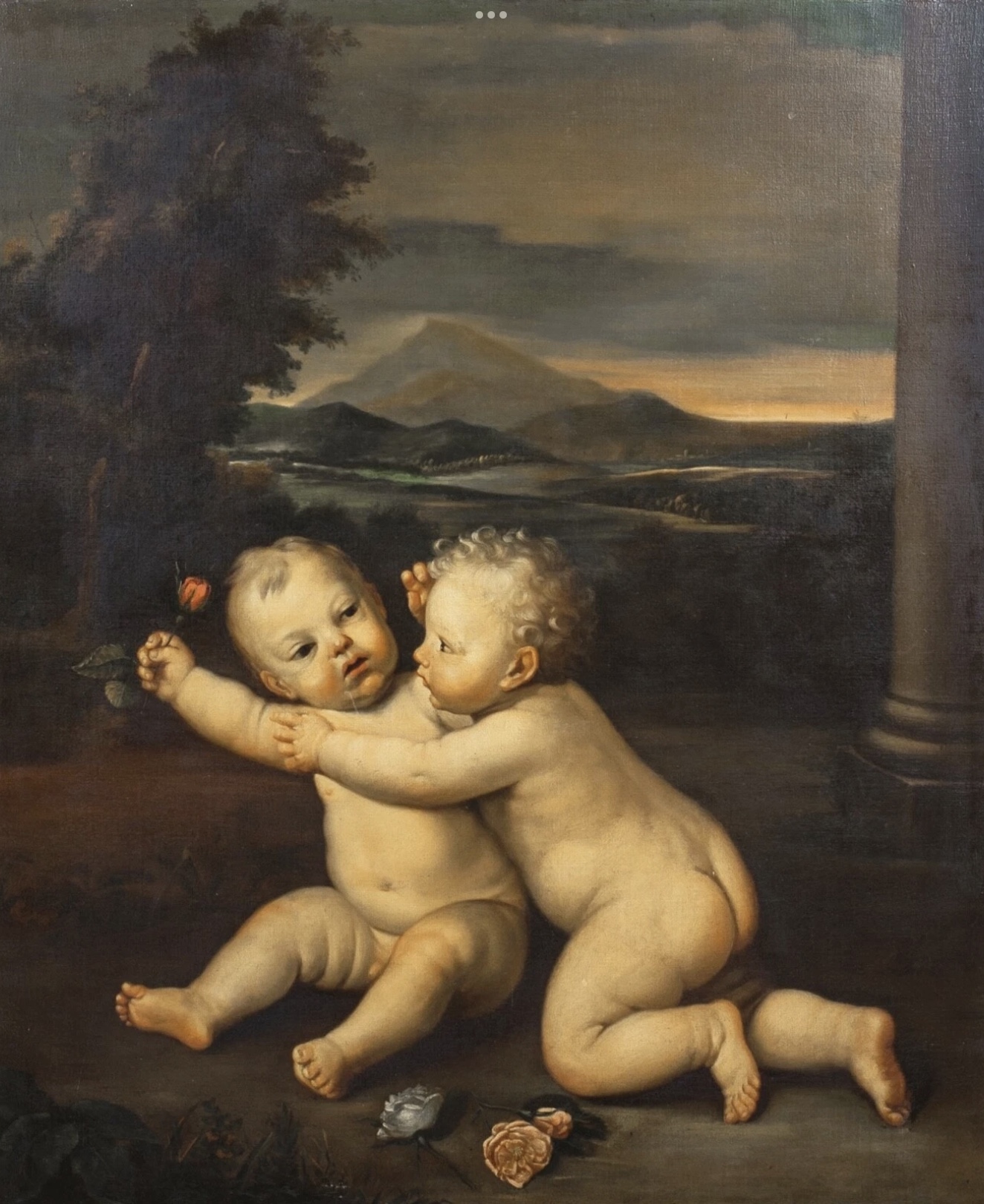
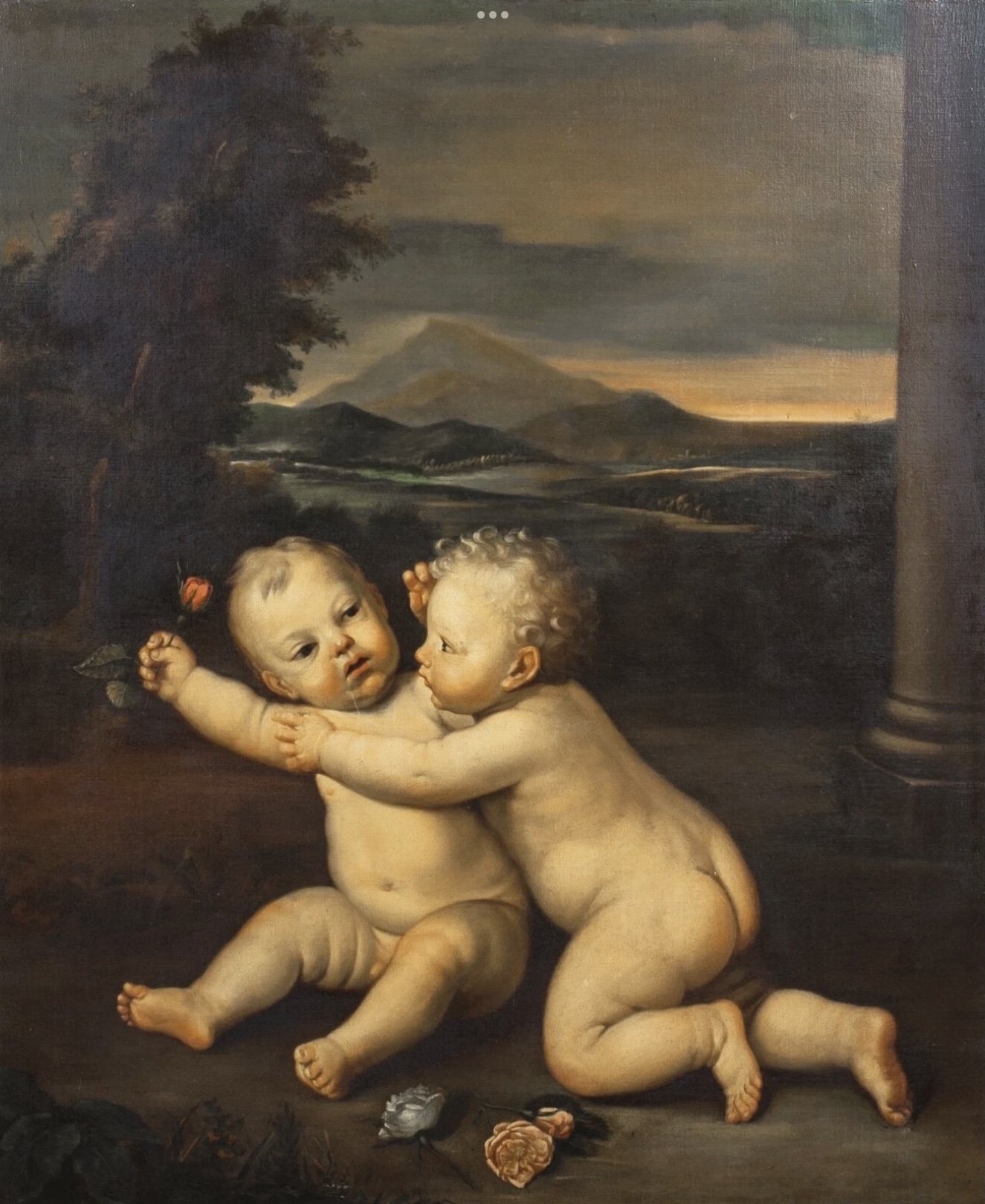
Based on 17th-century art, a painting of a putto sitting and holding a rose typically represents an allegory of love, fleeting beauty, or innocence, often associated with the goddess Venus or, in religious contexts, the Virgin Mary
EXAMPLES
17th Century, Emilian School, Putto With Rose: Often specifically oil on canvas showing sitting putto squeezing a flower (rose or peony) while looking at the viewer.
Often featuring a soft, light-filled style typical of the Emilian school.
17th-century, Italian School, Still Life with Putti: A Roman 17th-century oil painting, sometimes found in pairs or sets, depicts putti alongside flowers and fruit.
Carlo Innocenzo Carloni, Putti Holding Flowers: While some of his work extends into the 18th century, Carloni’s style of putti, often sitting or reclining among roses and flowers, reflects the late Baroque/early Rococo transition.
Workshop of Rubens, Putti with Flowers: Rubens frequently used putti in his commissions, often as part of larger, triumphant allegories.
SYMBOLISM &STYLE
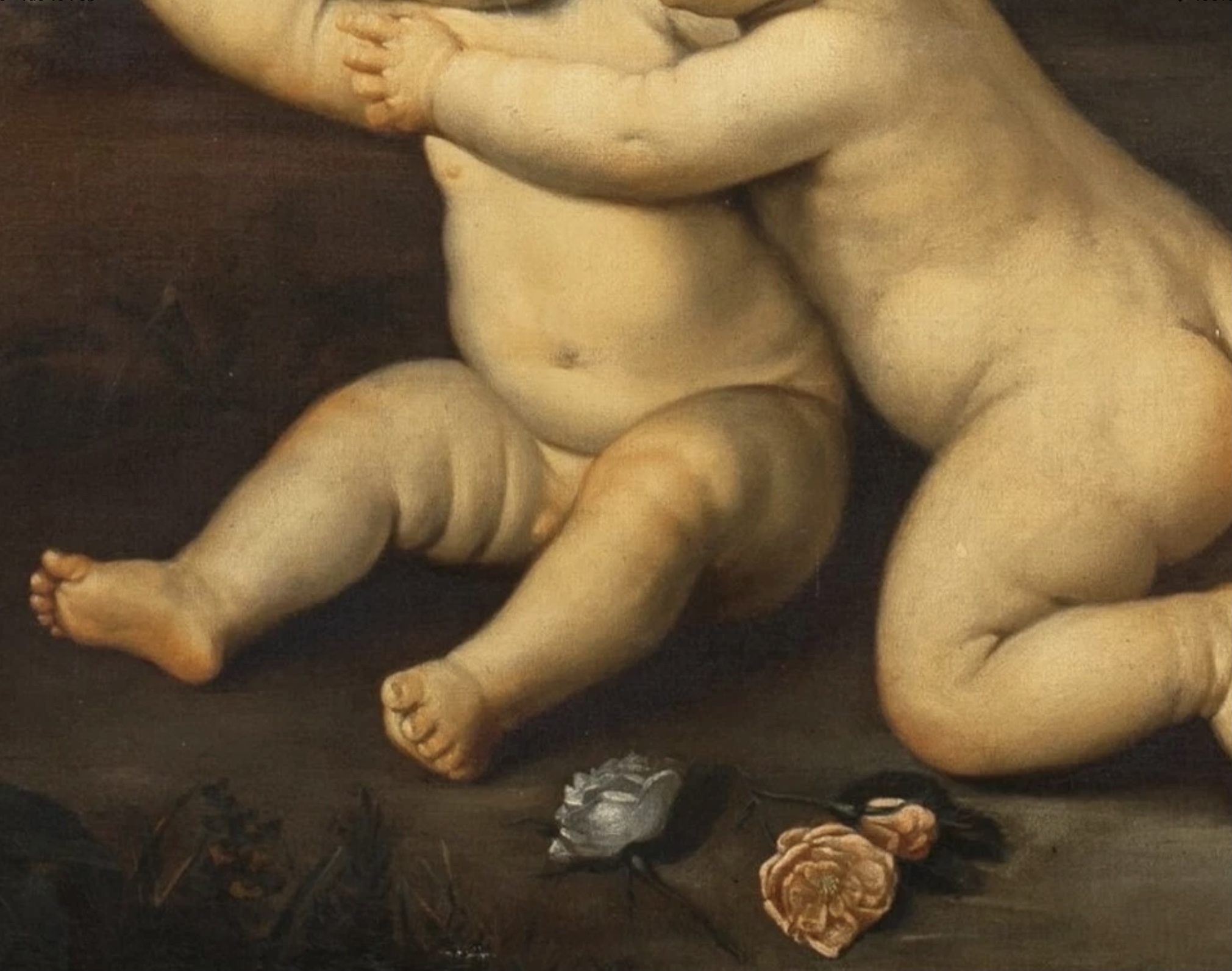
The Rose: Symbolises the fleeting nature of love and the joy it brings, or in Christian art, the ”Rosa senza spine” (rose without thorns) representing the Virgin.
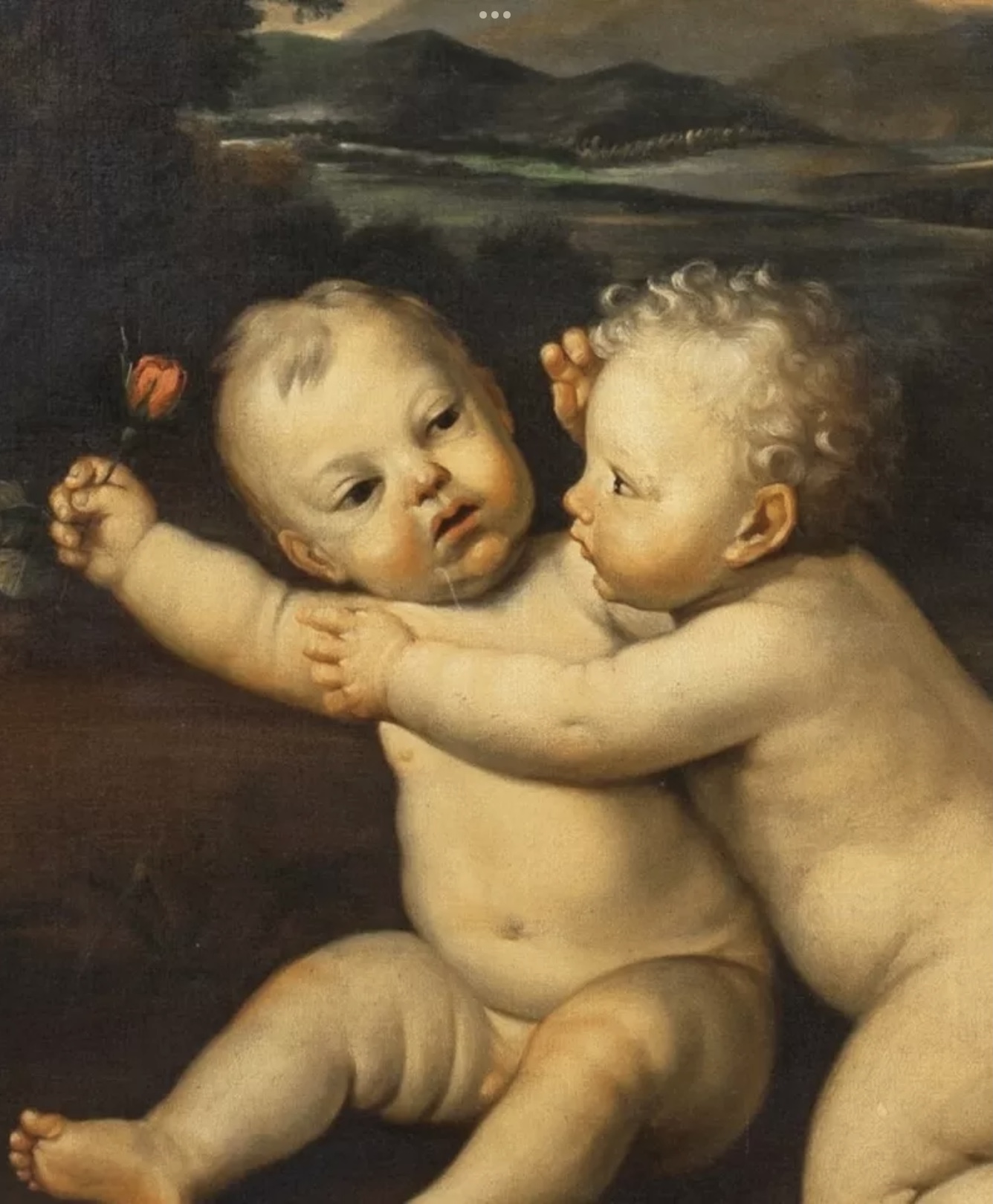
PUTTI CHARACTERISTICS In this period, putti are often depicted with soft, chubby, amber-skinned bodies, frequently set against a soft or dark, atmospheric background.
ALLEGORY OF SUMMER
In some, particularly northern European, examples, putti holding flowers or sitting among foliage are used to represent the season of summer or spring.
INSCRIPTION
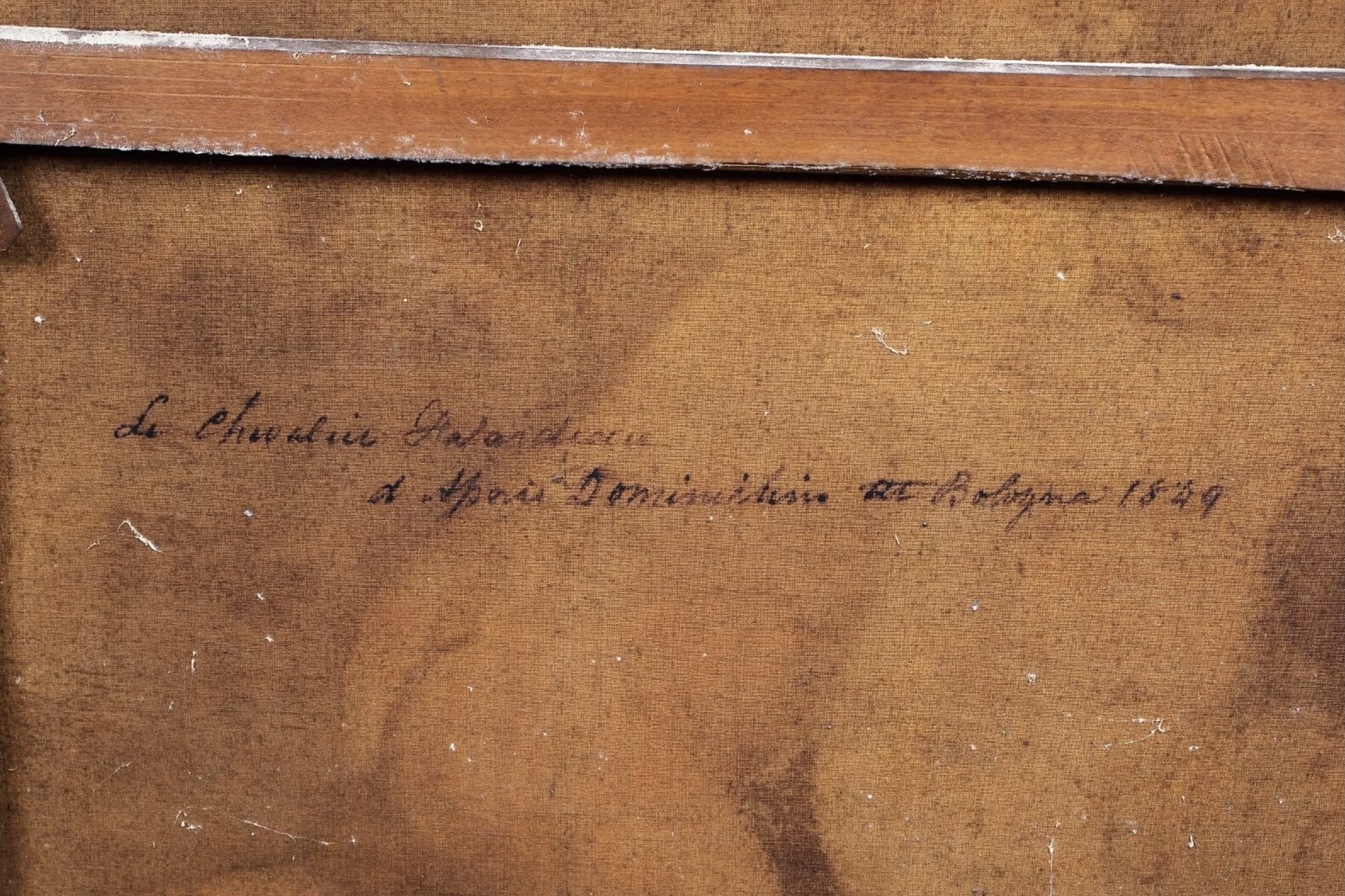
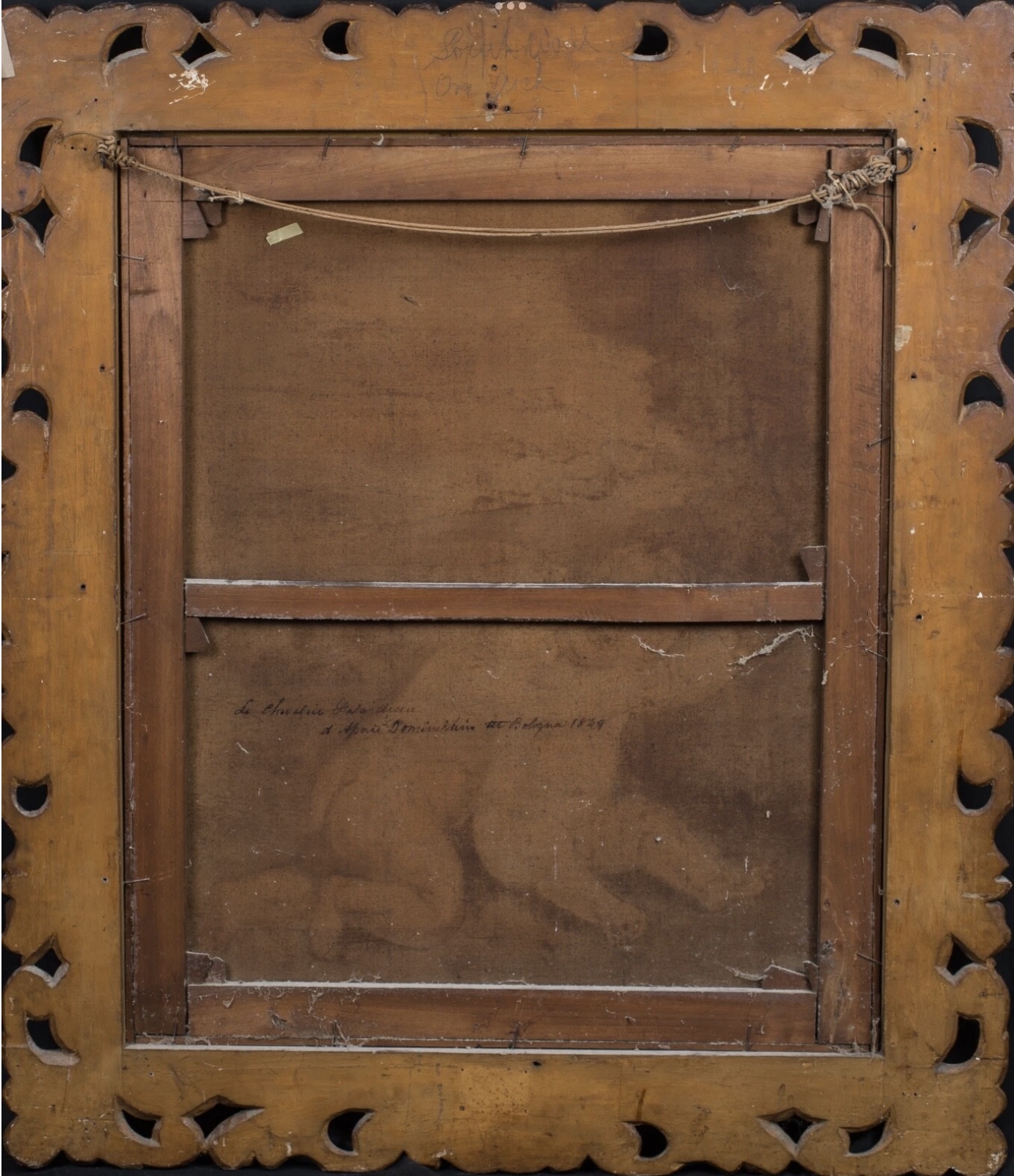
A penned inscription says “ after “ artist Domenico Zampieri 1849.
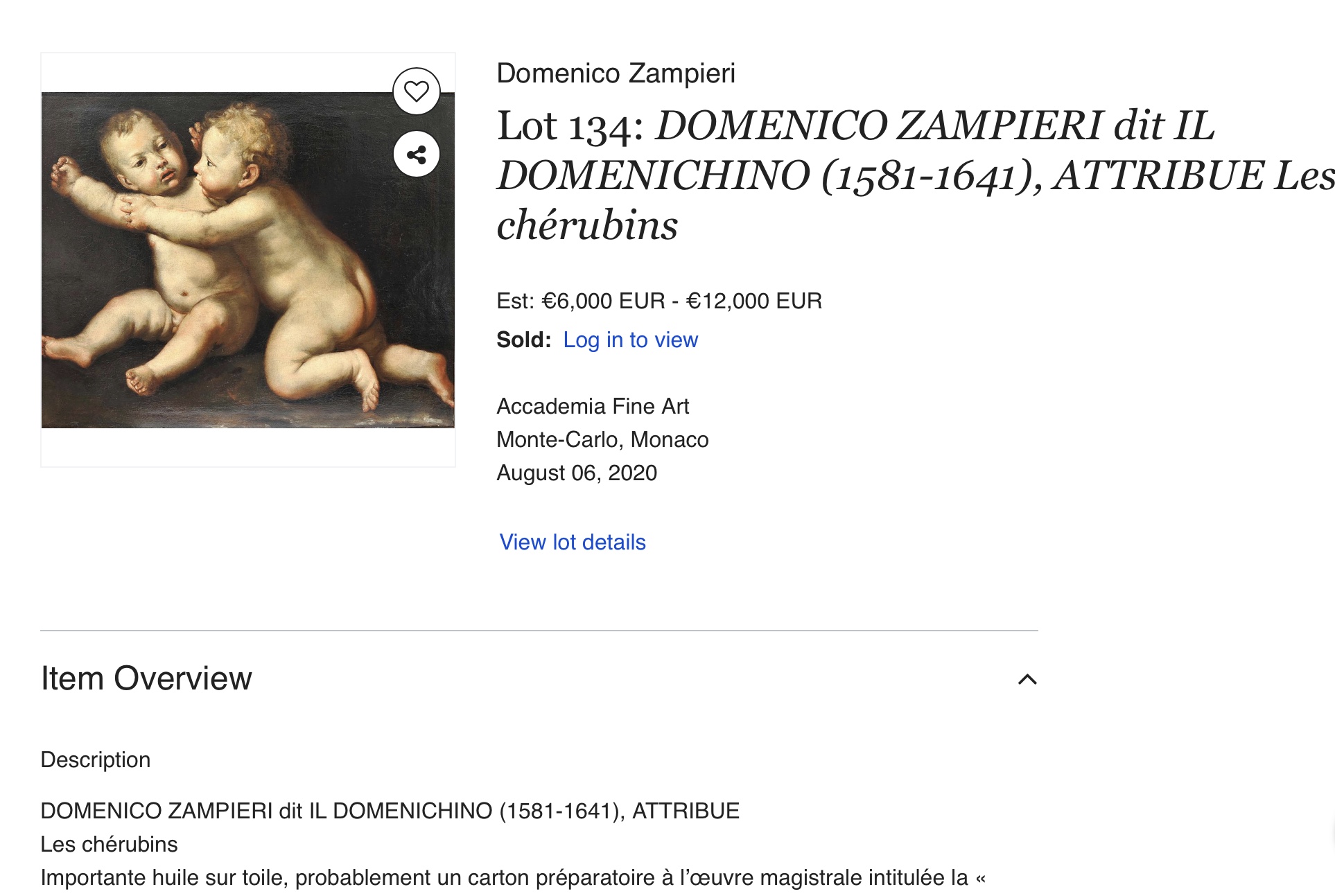
SAMPLE IMAGE / FROM AUCTION LISTING
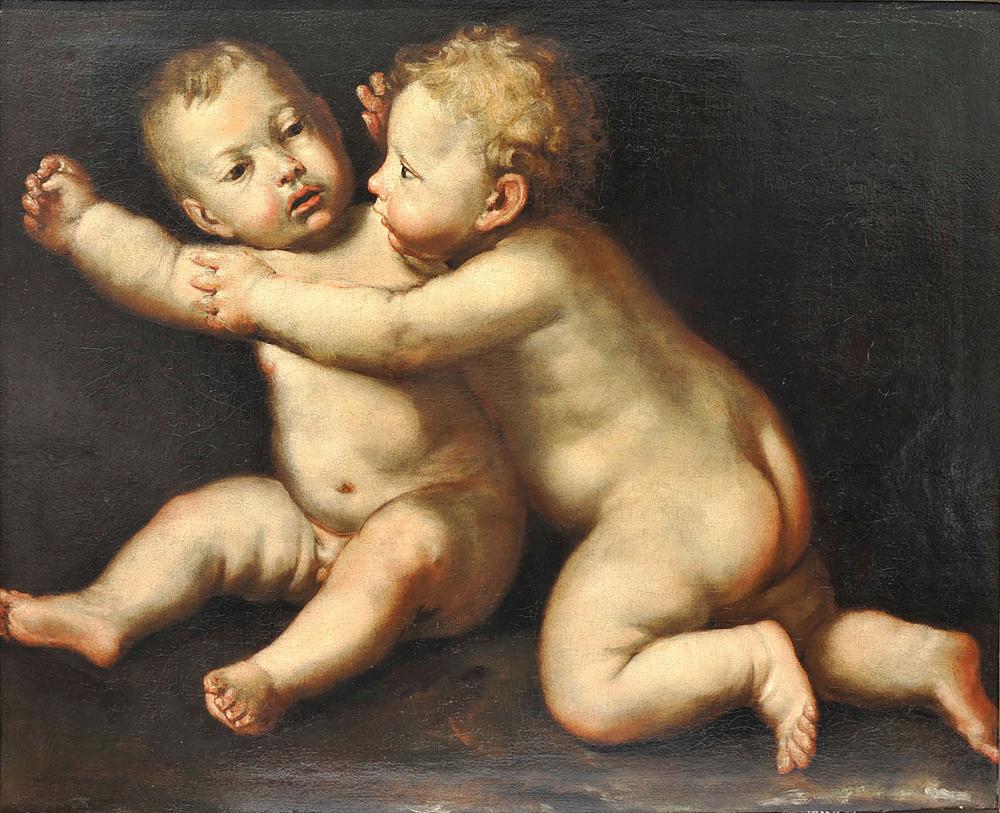
Small 17th Example of the same Cherubs
attributed to Domenico Zampieri, stating a pre cartoon of a work or cut down piece from a much larger scale work , perhaps no longer in existence.
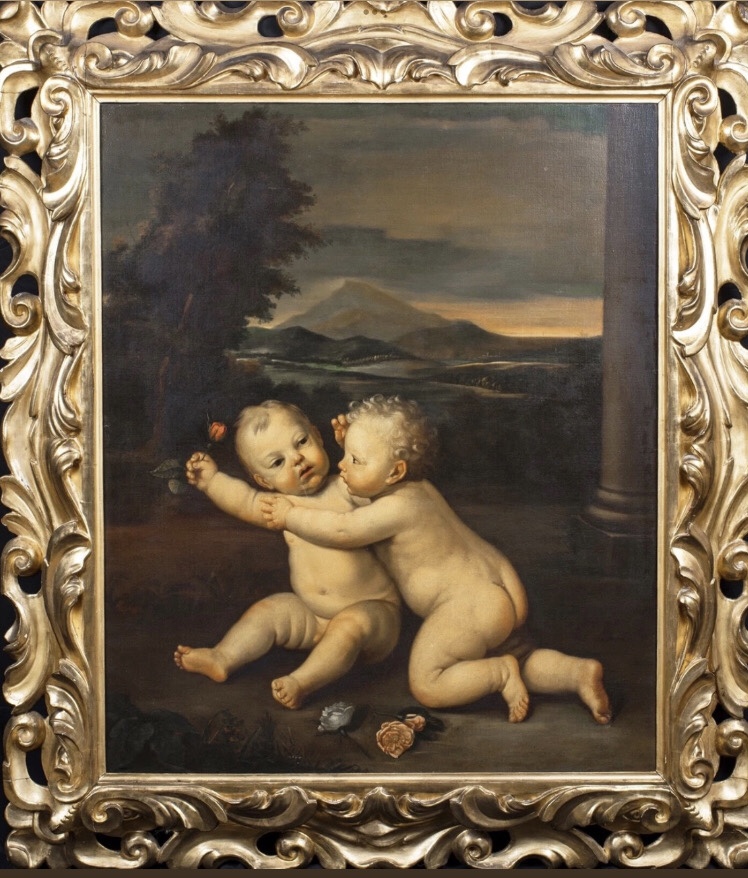
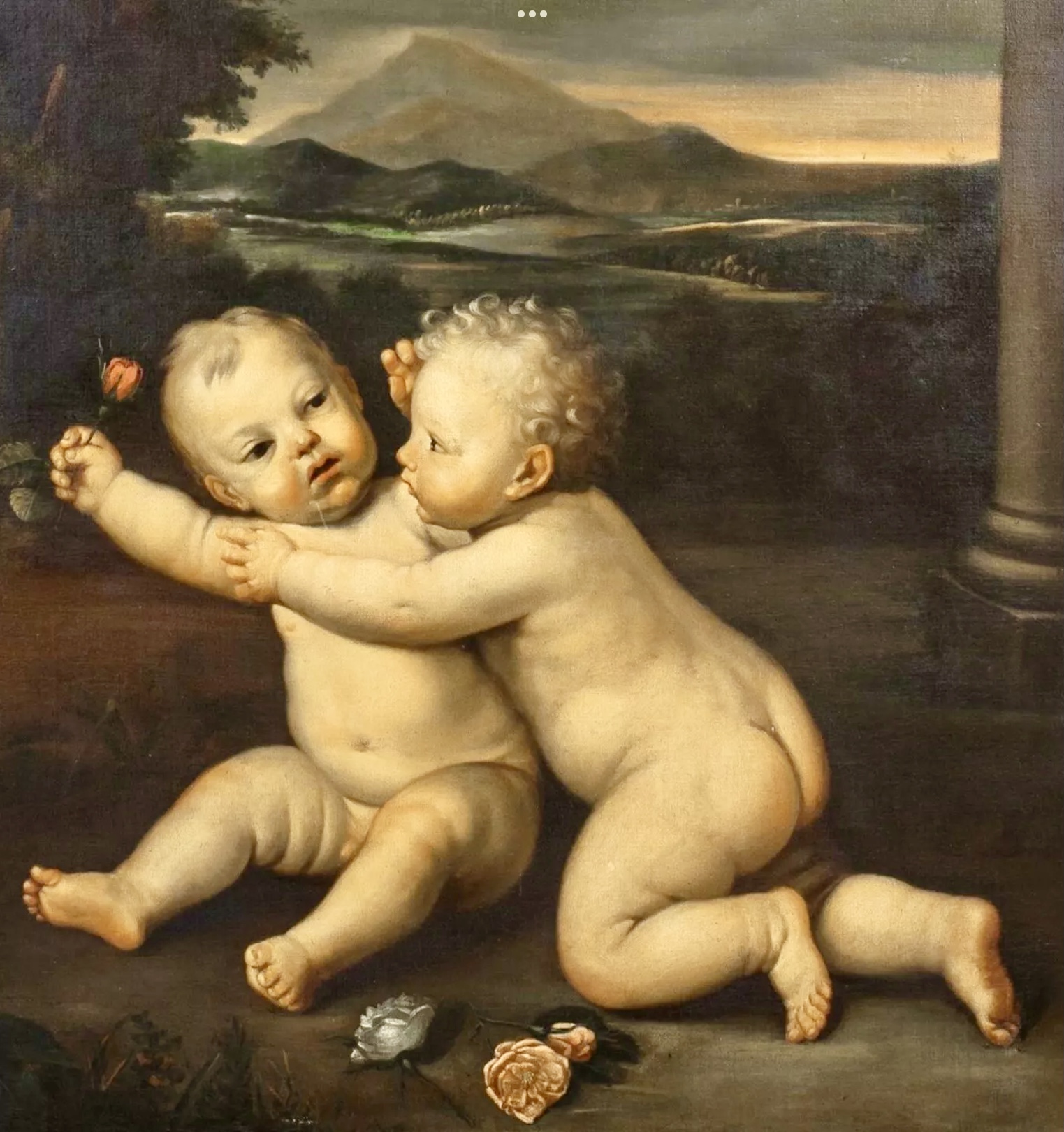
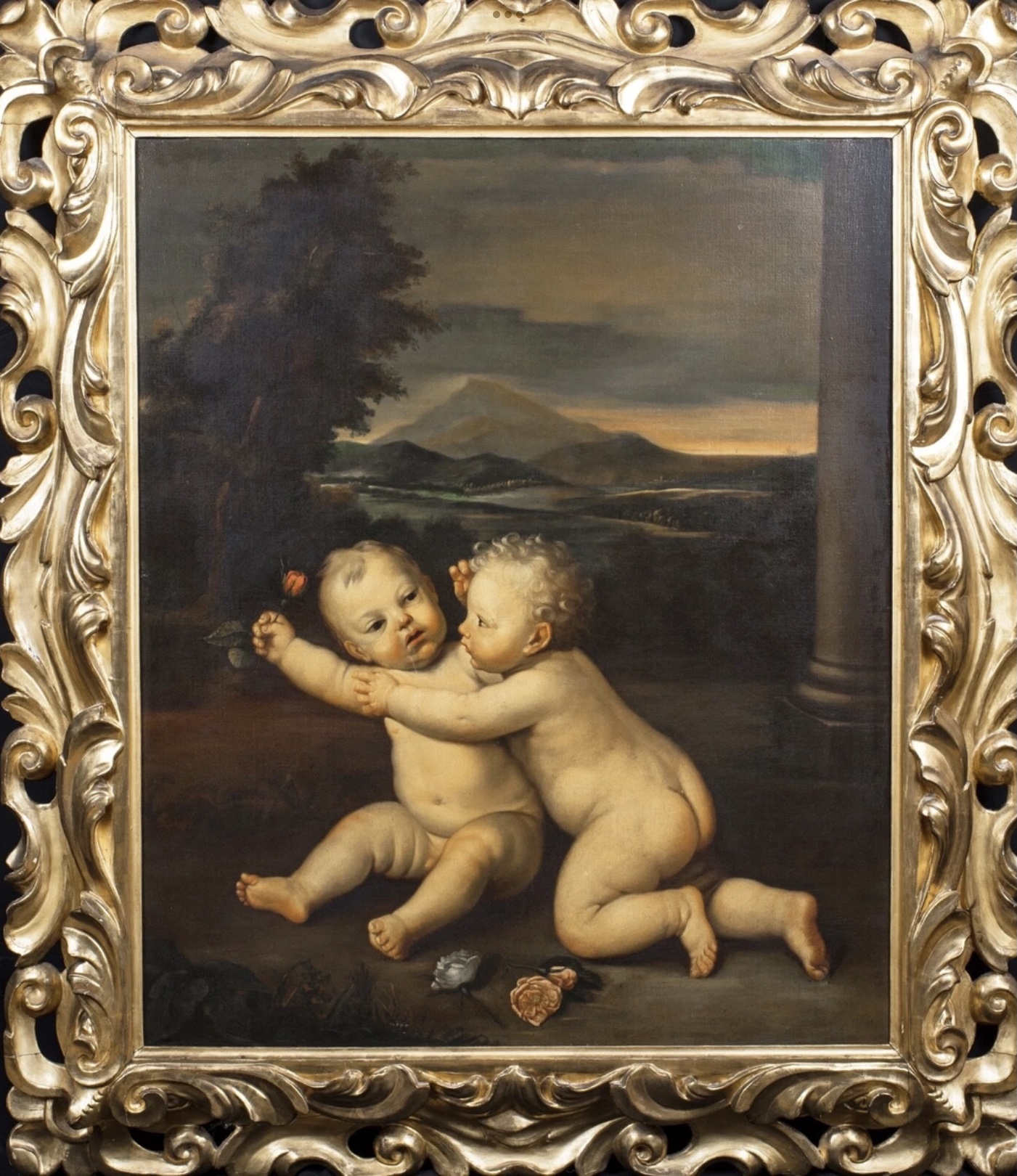
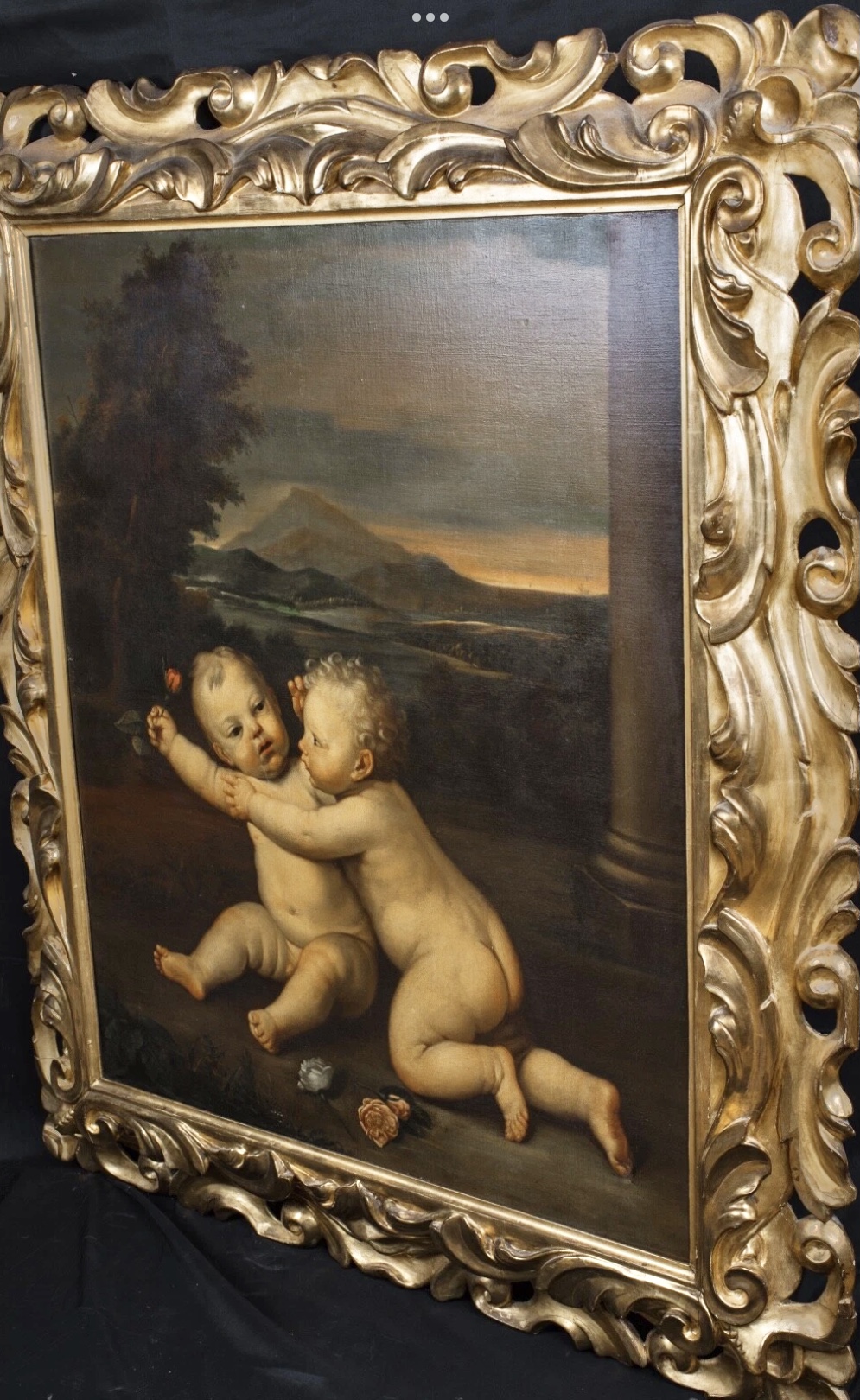
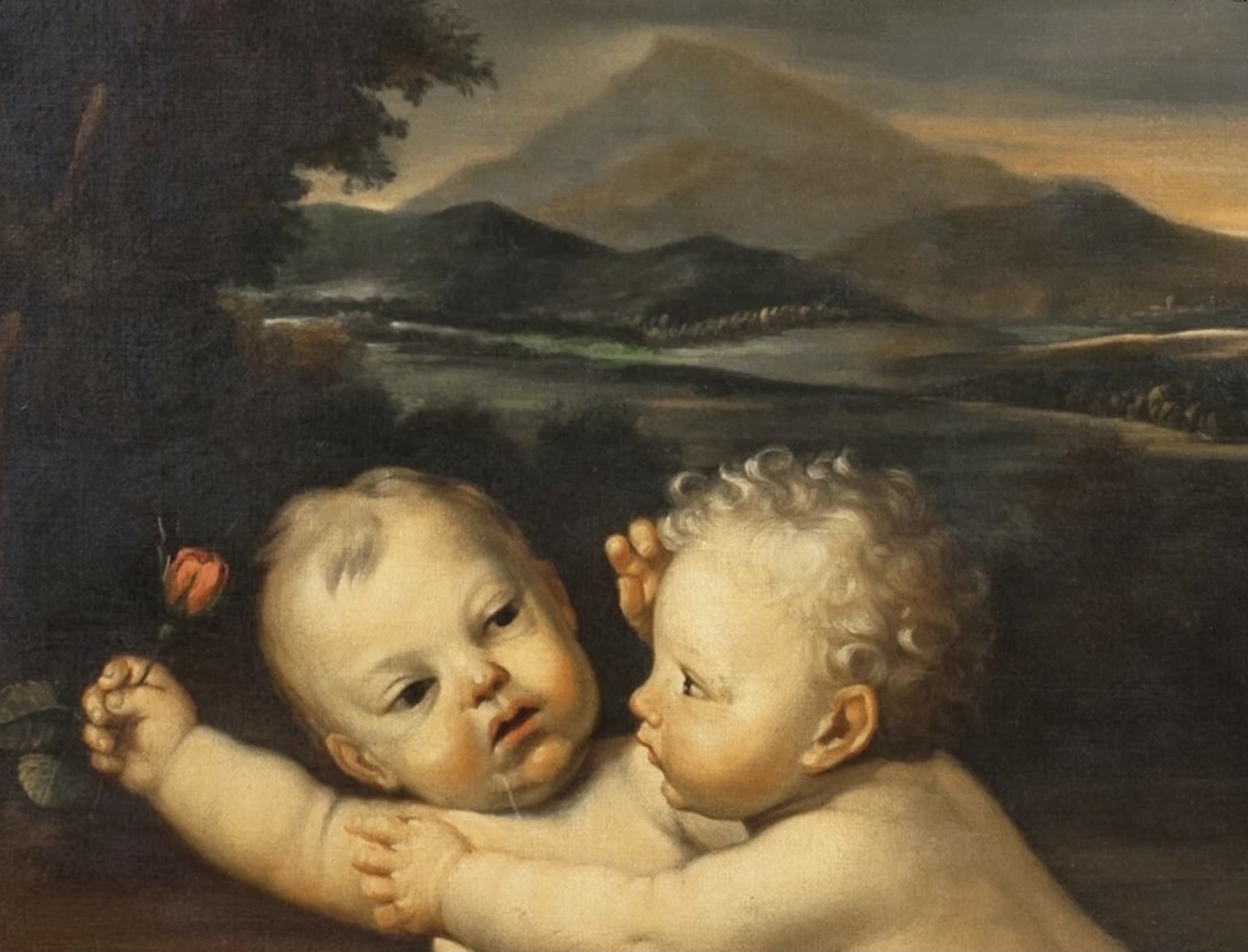
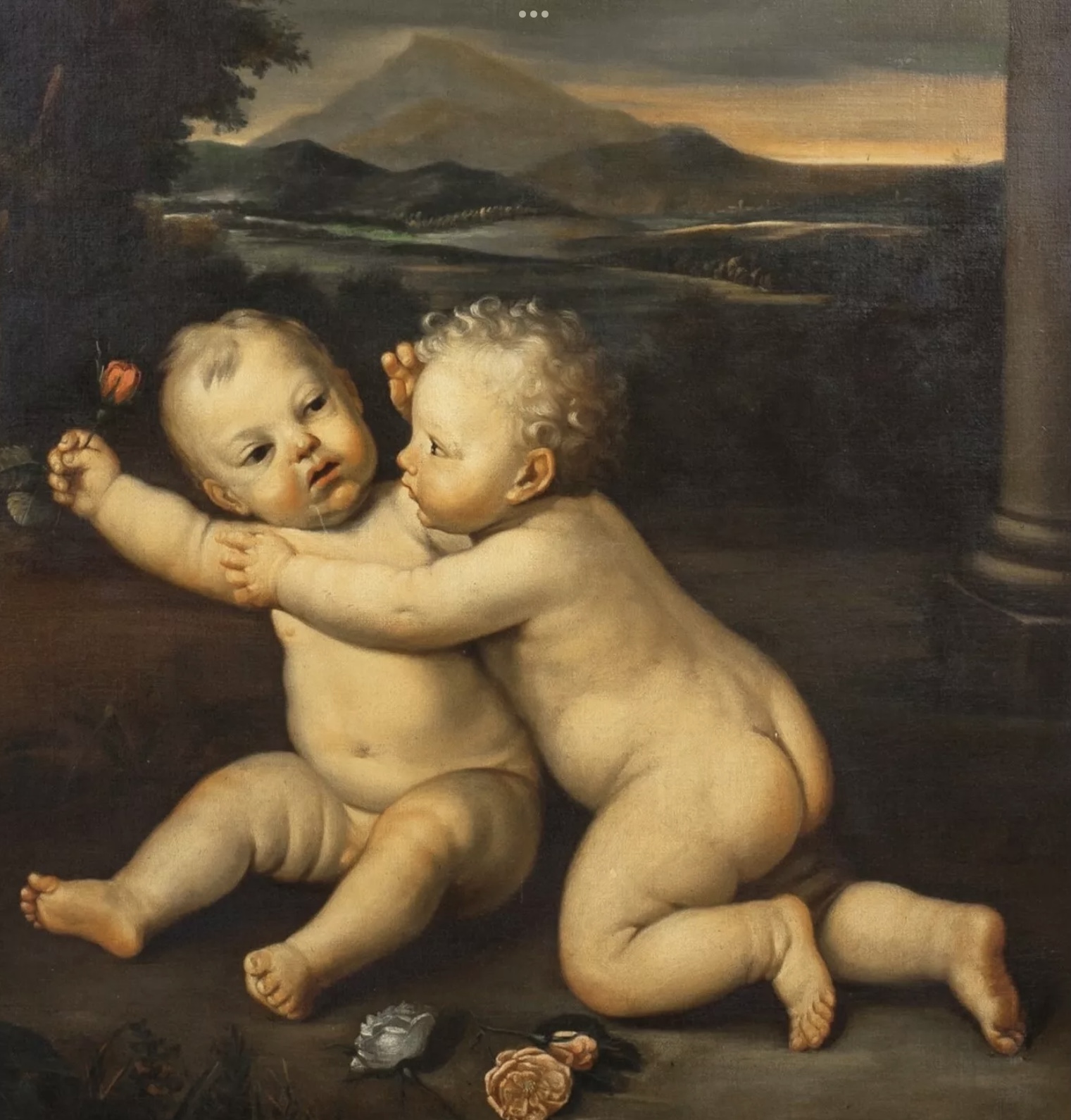
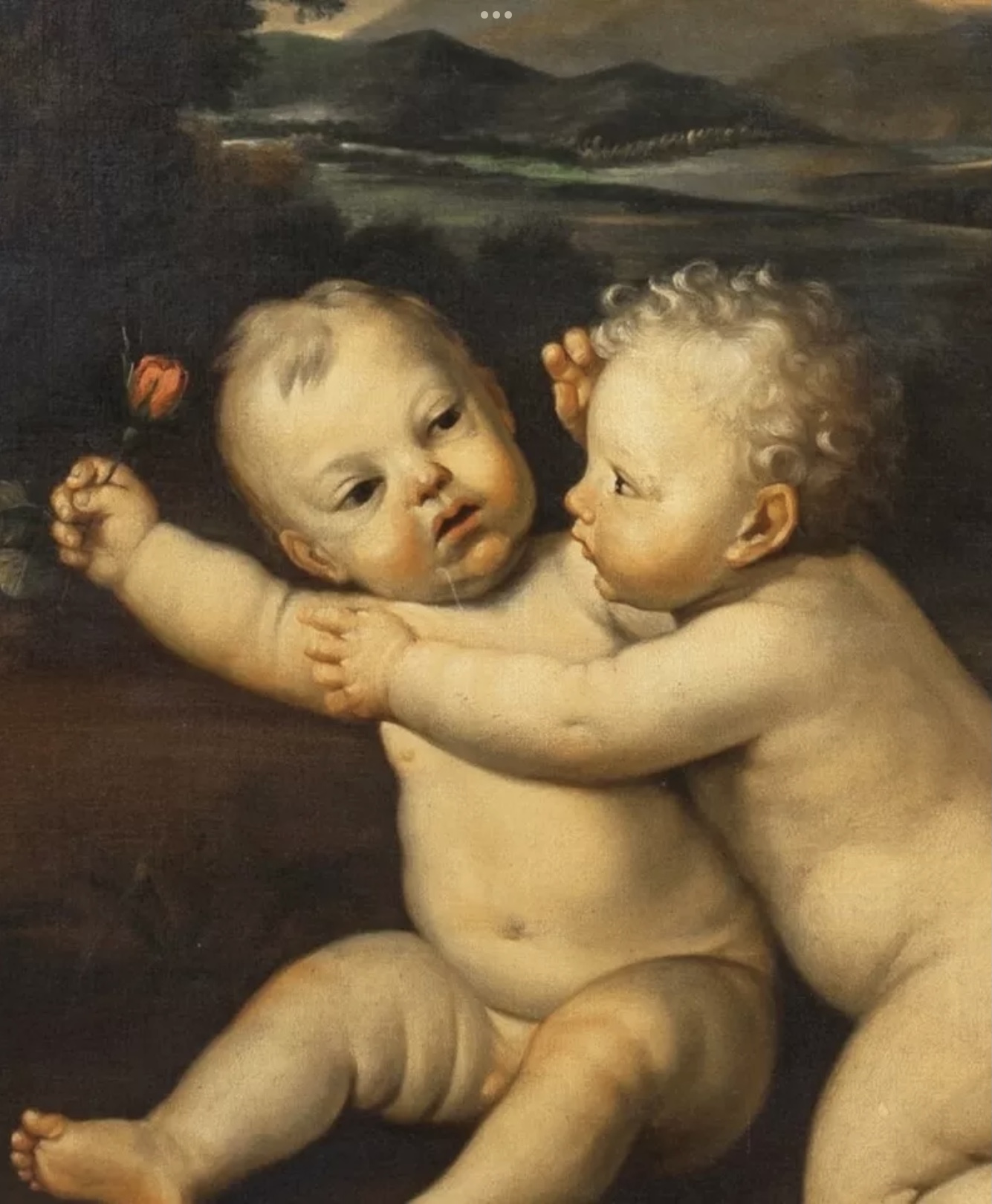
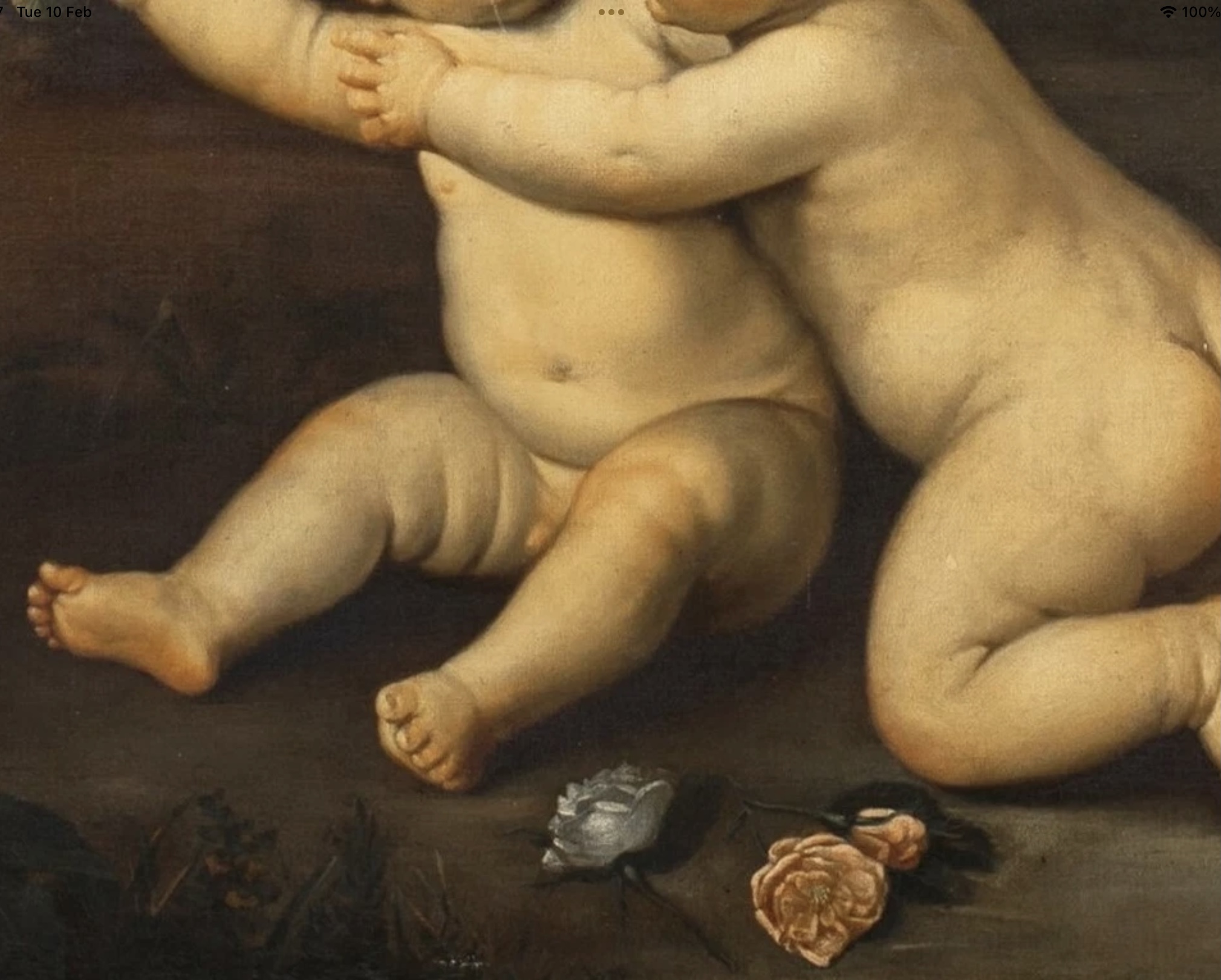
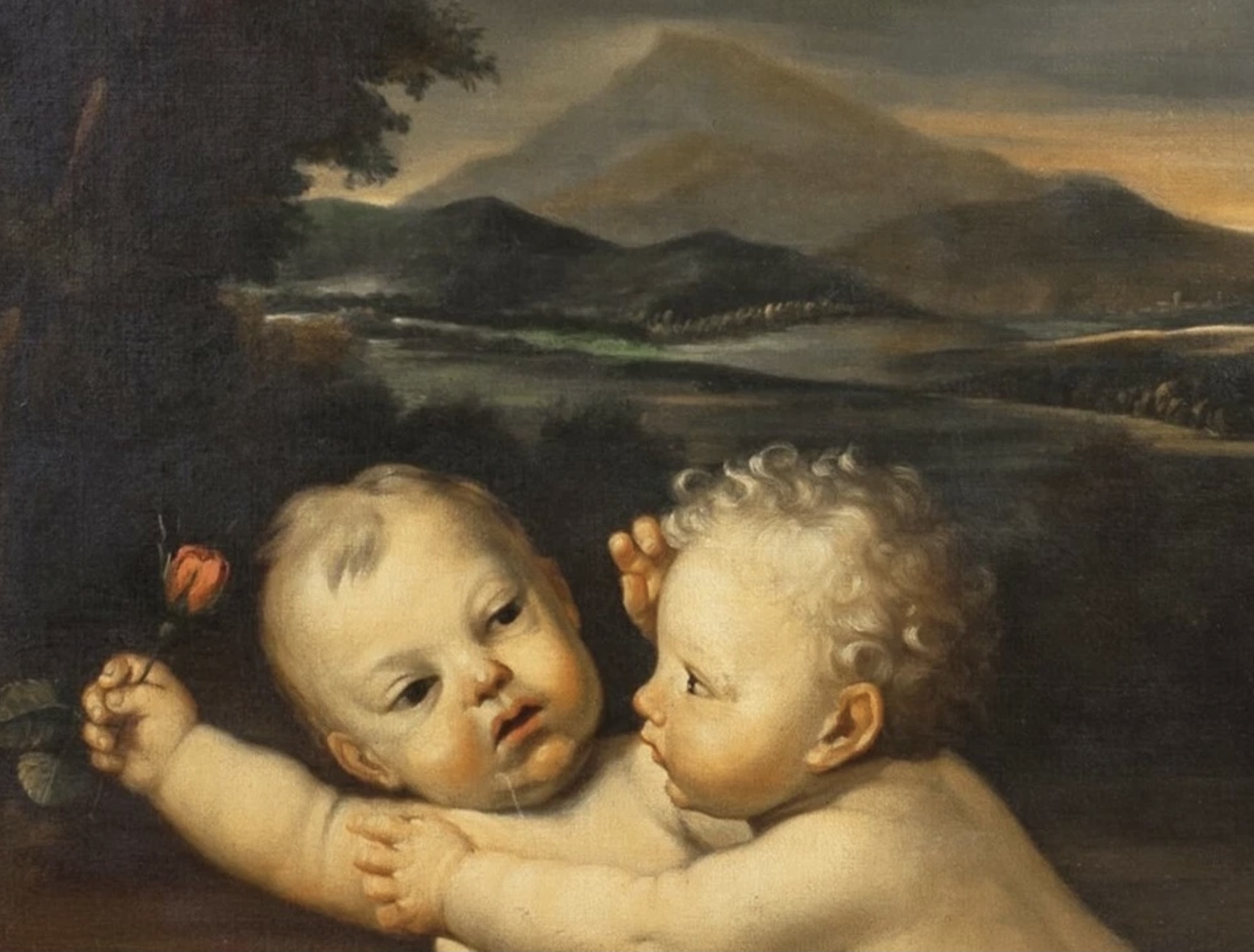
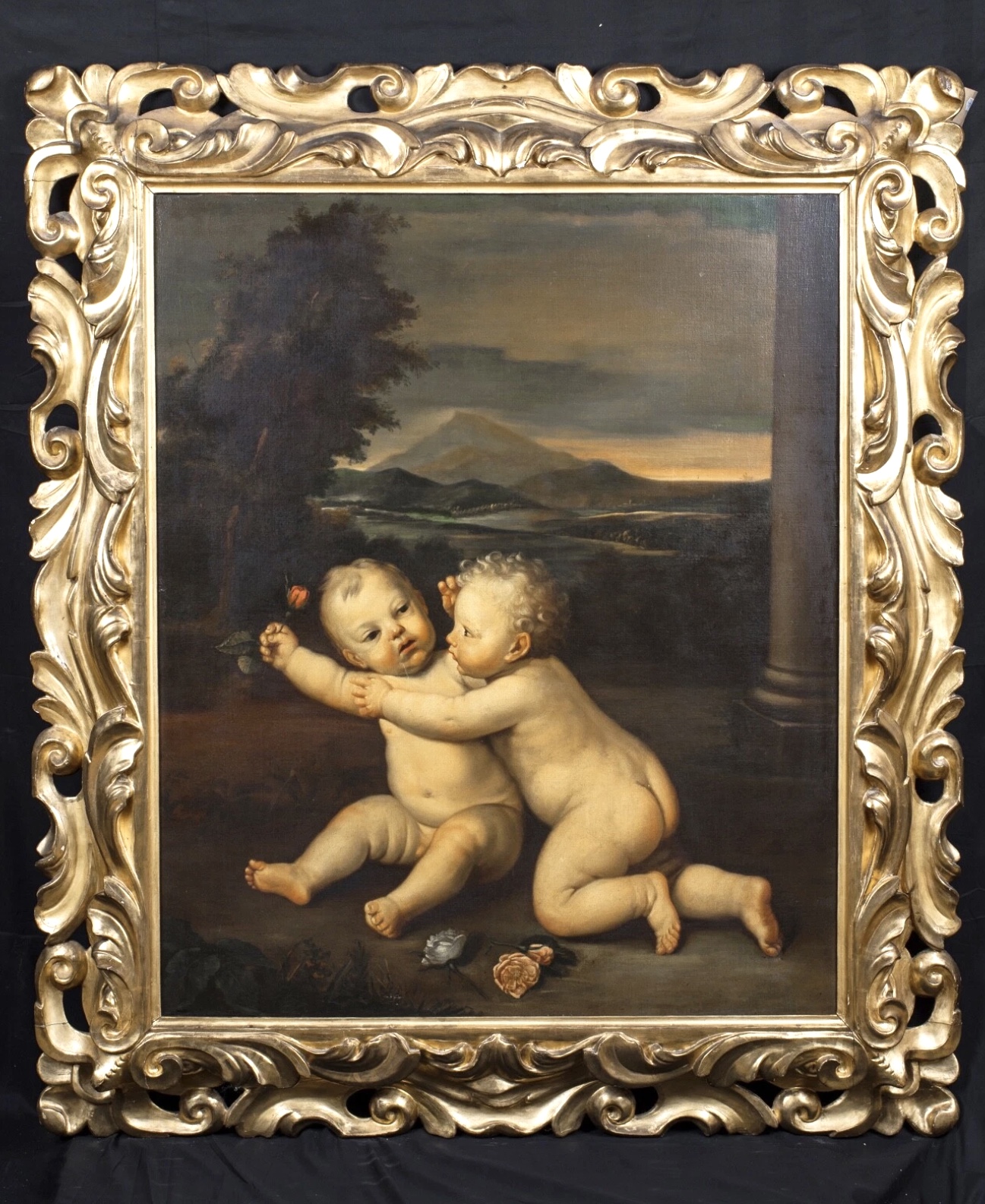
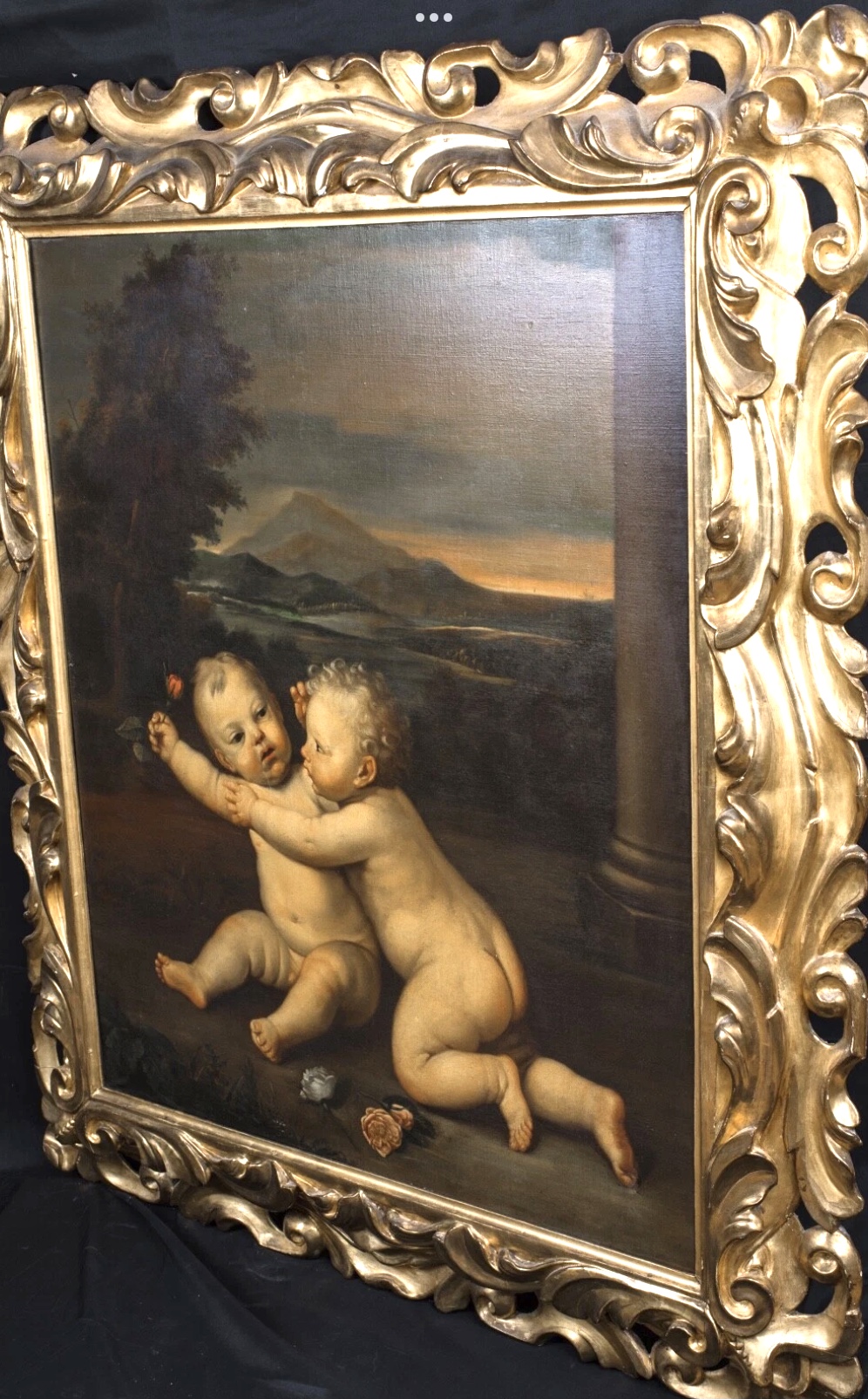
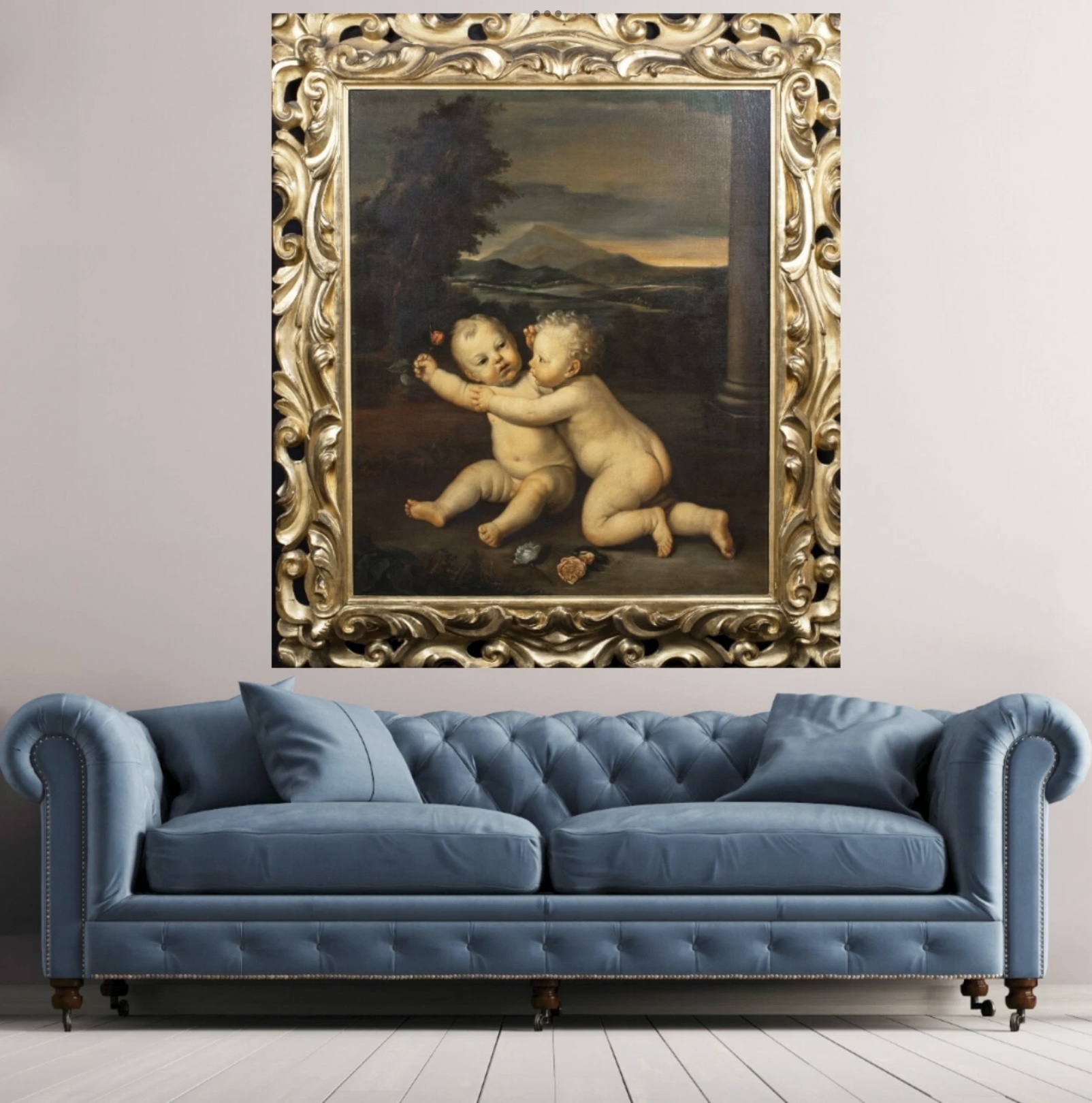
Our example is finished with rose in hand and has flowers painted in the foreground placed within a full landscape with stone pillar to the right margin providing scale, having a sunset and mountainous terrain beyond with sky.
FRAME :
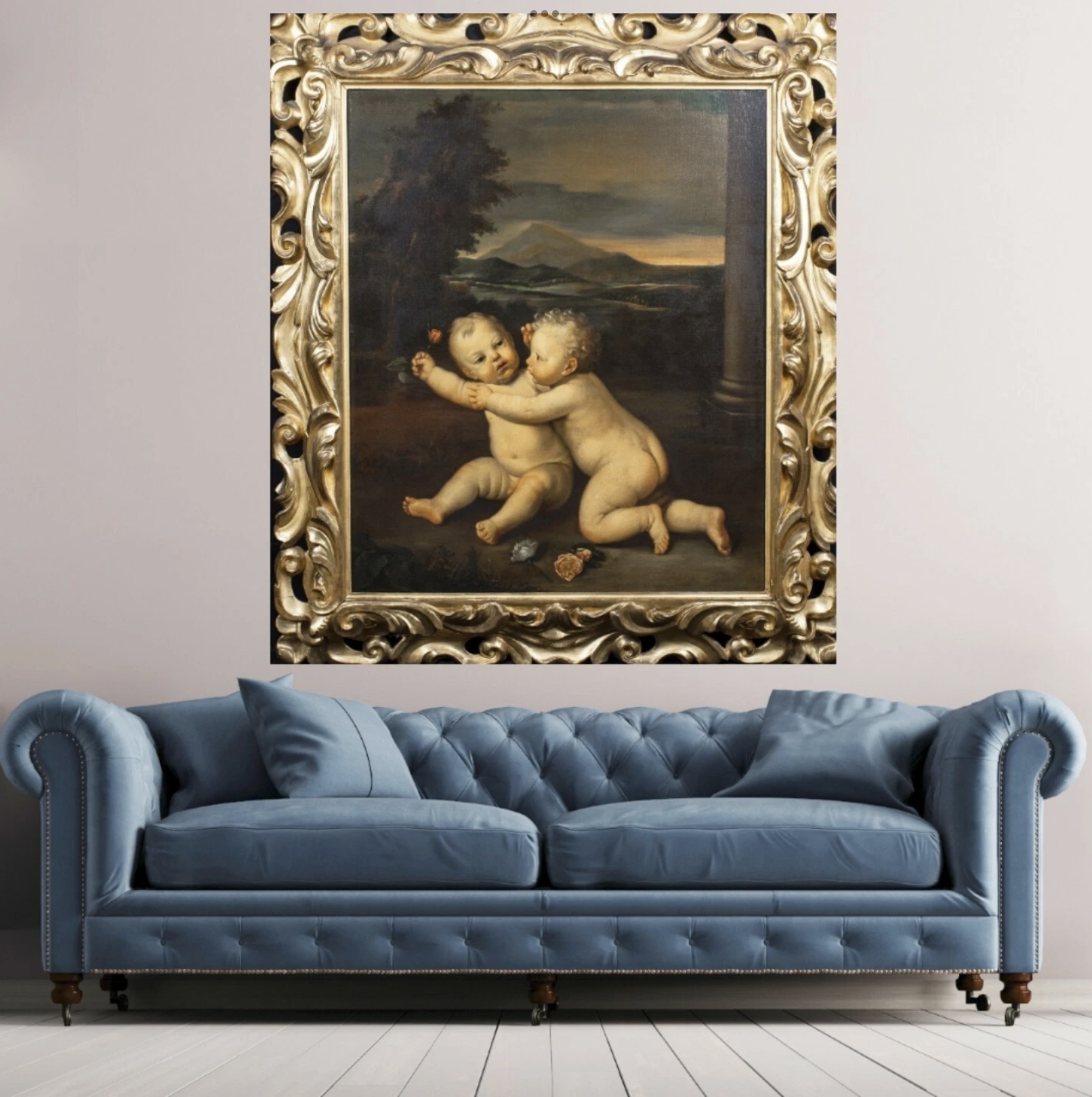
Presented in an early 19th century Venetian Gilt Carved Frame of Italian origin.
DELIVERY :
UK By Specialist Art Courier £150
Worldwide : EU £1000 / USA £1200
TELEPHONE Enquiries : 07765 856171
Ref : 0952
Store Name: Mansion House Antiques & Fine Art
Store Email Address: enquiries@mansionhouseantiques.co.uk
Contact Number: 07765856171
Date Joined: 22nd March 2021
You can commit to buy this item now. Proceed to checkout and complete shipping and contact details. Seller will be in touch to confirm delivery options, take payment and confirm the delivery. Note: Delivery costs may be added on by the seller.
In Stock
Contact the seller by filling out this form below. Seller will contact you back directly by email. You will need to arrange delivery, final cost & payment directly with the seller. Alternatively you can phone the dealer by clicking “Dealer Details”. Phone number will only show if seller has enabled phone call option.